Back to School Brushes: Rethinking Design Resources for the Modern Creative Workflow
The design landscape continues to shift beneath the feet of professionals who rely on speed, consistency, and visual storytelling. In a world where content calendars revolve around seasonal moments, the "Back to School" period remains one of the most commercially and culturally significant windows of the year. Enter the Back to School Brushes — a concise yet highly functional resource pack consisting of three illustrated brush motifs delivered in a single ZIP folder containing one JPG file and one EPS file. While the concept may appear straightforward, its implications for creative professionals, marketers, and entrepreneurs run deeper than the file format suggests.
This article explores what Back to School Brushes actually offers, why it has captured attention across design communities, and how it aligns with broader shifts in creative production, asset management, and audience engagement. Whether you are a freelancer building a seasonal campaign or a brand team streamlining your visual library, understanding the strategic value of such resources can reshape how you approach both your toolkit and your output.
What Is Back to School Brushes? A Practical Definition
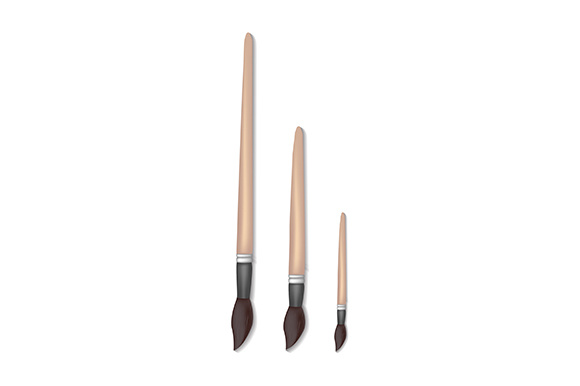
At its core, Back to School Brushes is a curated digital asset package that provides three distinct brush illustrations — each rendered with an aesthetic that evokes the textures, colors, and symbols associated with the back-to-school season. The delivery mechanism is a single ZIP folder that contains two files: one high-resolution JPG for immediate use in raster-based applications, and one editable EPS file for scalable, vector-based manipulation in programs like Adobe Illustrator, CorelDRAW, or Affinity Designer.
The package is lightweight yet deliberate. The three brushes are not merely random strokes; they are carefully designed motifs that can function as standalone graphic elements, overlays, texture accents, or repeating patterns. This intentionality makes the pack more than a collection of digital artifacts — it becomes a micro-library of visual language that speaks to themes of learning, growth, structure, and nostalgia.
For the uninitiated, EPS (Encapsulated PostScript) is a vector format that preserves sharpness at any size, making it ideal for everything from business card details to billboard-scale installations. The accompanying JPG file offers immediate compatibility with platforms that do not support vector editing, such as Canva, social media schedulers, or presentation software. This dual-format approach ensures that the resource is accessible across skill levels and use cases, from seasoned illustrators to entrepreneurs managing their own brand assets.
How Back to School Brushes Fits into Broader Industry and Creative Trends
The rise of micro-assets — small, purpose-specific design elements that can be deployed quickly across multiple channels — reflects a larger maturation of the creative economy. Professionals are moving away from monolithic, all-in-one asset libraries and toward curated, context-rich packs that reduce decision fatigue and accelerate execution. Back to School Brushes embodies this shift. Instead of offering hundreds of generic brushes, it delivers three highly relevant illustrations that align with a specific seasonal moment.
This approach mirrors a trend in both marketing and product design: the move from abundance to relevance. In a landscape overflowing with free and paid resources, the differentiating factor is no longer quantity but contextual fit. Creators and brands are increasingly curating their toolkits around narratives, campaigns, and timelines. A set of brushes designed for the back-to-school period does not just serve a functional need — it also carries cultural resonance. The imagery of pencils, chalkboards, apples, and open books evokes a shared emotional experience that cuts across demographics.
Moreover, the ZIP folder delivery mechanism speaks to another industry development: the expectation of portability and instant use. Modern creatives do not want to navigate bloated interfaces or download multiple files for a single asset. A compressed folder containing a JPG and an EPS file represents a frictionless exchange — one click, two formats, immediate deployment. This aligns with the broader demand for efficiency in digital asset management, where every second saved in locating and preparing a resource translates into more time for ideation and refinement.
From a technology standpoint, the inclusion of both raster and vector formats acknowledges the hybrid workflows that dominate contemporary design. Many professionals begin a project in a vector environment for scalability and then export to raster for web use or texture application. The Back to School Brushes pack facilitates this bidirectional movement without requiring the user to reconstruct or re-license assets. It is a small but meaningful nod to the reality that creative pipelines are no longer linear.
Why Creators, Marketers, and Entrepreneurs Are Paying Attention
Attention in the creative space is increasingly directed toward resources that offer immediate versatility. The Back to School Brushes pack is gaining traction because it solves a recurring problem: the gap between seasonal demand and ready-to-use assets. For a social media manager planning a September campaign, finding brushes that look authentic rather than generic can take hours. For an entrepreneur producing limited-edition packaging for a back-to-school promotion, the EPS file allows customization — changing colors, scaling elements, or combining brushes — without starting from scratch.
Freelancers, in particular, appreciate the time-to-value ratio. The pack reduces the friction between concept and execution. Instead of sketching original brush textures or searching through unfiltered libraries, they can open the EPS file, tweak the vector paths to suit their palette, and integrate the result into a composition within minutes. This speed does not sacrifice quality; the illustrations are crafted to hold their own in professional contexts, whether used as standalone graphics or layered into more complex designs.
Another reason for the growing interest lies in the alignment with content calendar planning. The back-to-school season is one of the most predictable and impactful periods for consumer engagement. Brands that delay asset creation until the week of the campaign often produce work that feels rushed. Having a dedicated brush set on hand — one that is already curated, tested, and format-ready — enables earlier planning and more cohesive visual storytelling. Marketers can mock up social tiles, email headers, landing page accents, and print collateral using the same visual vocabulary, ensuring consistency across touchpoints.
Furthermore, the dual-file structure (JPG + EPS) lowers the barrier for teams with mixed technical expertise. A copywriter or project manager can drop the JPG into a presentation or mood board without needing vector software, while the designer can take the EPS and build on it. This collaborative flexibility is often overlooked in asset discussions, but it directly impacts workflow efficiency and cross-departmental alignment.
Changing Needs, Preferences, and Workflows That Make This Resource Relevant
The creative industry is undergoing a quiet transformation in how assets are valued. The days of hoarding thousands of unused brushes and icons are giving way to a more intentional approach: fewer files, more meaning. Back to School Brushes fits this paradigm because it does not try to be everything. It is specific, and that specificity is its strength.
One notable shift is the rise of seasonal and cultural specificity in design. Audiences are more visually literate than ever, and they can detect when an asset is generic or reused across campaigns. A brush set designed explicitly for back-to-school contexts carries an authenticity that a generic "educational" pack may lack. The illustrations tap into shared visual cues — the distinct lines of a freshly sharpened pencil, the curve of an apple, the geometry of a chalkboard grid — that resonate because they are rooted in collective experience. This is not about trend-chasing; it is about cultural fluency.
Another change is the expectation of cross-platform adaptability. A modern design asset must work on a smartphone screen, a printed poster, and a video overlay — often within the same campaign. The EPS vector format ensures infinite scalability without pixelation, while the JPG provides a ready-to-use reference for environments that only accept raster formats. This dual readiness reduces the need for conversion steps and preserves the integrity of the artwork across media.
Workflow preferences are also evolving toward modularity and reusability. Professionals are building personal and team libraries of assets that can be mixed, matched, and reconfigured for different projects. The three brushes in this pack are designed to function individually or in combination. For example, one brush might serve as a background texture, another as a border element, and the third as a focal graphic. This modularity extends the useful life of the pack well beyond a single campaign, making it a cost-effective addition to any resource library.
Practical Examples: Applying Back to School Brushes in Real-World Contexts
To understand the utility of this asset pack, consider a few concrete scenarios that span different roles and industries.
- Social media campaign for an educational brand: A marketing manager uses one brush as a repeating background pattern for a series of Instagram posts highlighting new course offerings. The JPG file is dropped into Canva, layered with text, and scheduled across the platform. The consistency of the brush texture ties the series together visually.
- Print collateral for a local bookstore's back-to-school event: A freelance designer opens the EPS file in Adobe Illustrator, recolors the brush elements to match the bookstore's brand palette, and scales them for use on postcards, in-store signage, and a window display. The vector format ensures the prints remain crisp at any size.
- Website accent for an online tutoring platform: A product designer uses one of the brushes as a hover-state graphic on call-to-action buttons. The texture adds warmth and tactile quality to an otherwise flat interface, reinforcing the learning theme without overwhelming the layout.
- Email newsletter header for a parent community: A content creator places the JPG version of a brush illustration as a background element behind the headline. The image loads quickly, renders well across email clients, and immediately signals the seasonal relevance to readers.
- Brand pitch deck for an edtech startup: An entrepreneur includes one of the brush strokes as a subtle visual motif on the cover slide and section dividers. The recurring element adds polish and narrative cohesion, suggesting that the team values design as part of its communication strategy.
These examples demonstrate that the resource's value is not limited to a single use case. It adapts to the medium, the audience, and the creator's technical comfort level. The common thread is that the brushes serve as a catalyst for faster, more coherent visual communication — exactly what busy professionals need.
Connecting the Topic to Larger Developments in Creative Production
The conversation around Back to School Brushes is part of a larger dialogue about the commoditization and democratization of design assets. As tools like AI-assisted generation and template-based platforms become more prevalent, the role of the human designer shifts from creating every element from scratch to curating, combining, and contextualizing existing assets. Resources like this pack empower that curatorial role. They provide a foundation that can be customized, rather than a finished product that must be used as-is.
This trend also intersects with the growing emphasis on brand consistency across distributed teams. With remote and hybrid work now the norm, organizations need assets that are easy to share, standardize, and implement across different locations and software environments. A ZIP folder with clearly named files in universal formats (JPG and EPS) meets that need without requiring a centralized digital asset management system. It is a low-friction solution that scales from solo freelancers to small marketing departments.
Additionally, the seasonal specificity of Back to School Brushes reflects a broader movement toward time-based design strategies. Brands are increasingly aligning their visual output with cultural moments — holidays, seasons, events, and awareness periods — to stay relevant and top-of-mind. Having a dedicated asset pack for each moment reduces the cognitive load of campaign planning and ensures that the visual language is ready before the rush begins. This is not speculation; it is a observable practice among high-performing creative teams.
Final Observations on the Value of Curated Brush Sets
The Back to School Brushes pack, with its three illustrated brush motifs in a single ZIP folder containing a JPG and an EPS file, is a small but revealing example of how the creative industry is evolving. It emphasizes relevance over volume, format flexibility over platform lock-in, and seasonal resonance over generic utility. For the professional who values efficiency, consistency, and cultural awareness, such a resource is not just a convenience — it is a strategic asset.
As you evaluate your own toolkit, consider the role that curated, context-rich resources can play in reducing friction and amplifying your creative voice. Whether you are preparing for the back-to-school season, planning a quarterly content calendar, or simply looking to refresh your visual library with intentional design elements, the principles behind this pack offer a blueprint for smarter asset selection. The future of design is not about having more — it is about having what matters, when it matters, in the format that works.
Back to School Brushes exemplifies that principle, and its growing attention among professionals is a sign of a deeper shift toward purposeful, adaptable, and culturally aware design practices.