Designing the Perfect Back to School Books Poster: From Concept to Print-Ready Files
Every year, educators, librarians, booksellers, and school administrators face the same seasonal challenge: how to capture attention and communicate the excitement of a new academic term. The Back to School Books Poster has become a staple visual tool in this effort, serving as both a promotional asset and a functional guide for students and parents navigating the return to classroom routines. Whether displayed in a school hallway, a public library, or a retail bookstore window, this type of poster needs to balance aesthetic appeal with clear, actionable information. Understanding how to create, distribute, and repurpose such a poster begins with knowing the file formats that bring it to life—and that is where the Back to School Books poster 1 ZIP Folder enters the workflow.
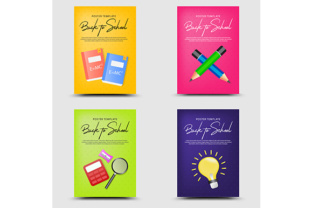
A well-designed poster does more than list titles. It signals a shift in mindset, from summer leisure to academic focus, while still retaining a sense of discovery and possibility. The Back to School Books Poster often features cover art from recommended reading lists, thematic imagery like stacked books and school supplies, and typography that is both legible and inviting. But behind every polished print lies a technical foundation that determines how the design can be used, shared, and modified. The inclusion of both a JPG and an EPS file inside the Back to School Books poster 1 ZIP Folder addresses two very distinct needs: immediate visual sharing and professional-grade editing flexibility.
Understanding the ZIP Folder Contents: JPG and EPS Files
The Back to School Books poster 1 ZIP Folder contains exactly two files: a single JPG and a single EPS. While this may seem minimal, the combination covers a wide range of use cases. The JPG file is a raster image, compressed for reasonable file size while retaining enough resolution for on-screen display, quick email attachments, social media posts, or low-volume printing. The EPS file, on the other hand, is a vector-based format that preserves crisp lines and scalable elements, making it ideal for professional printing, large-format output, and customization in graphic design software.
For educators who need to insert the poster into a newsletter or a classroom presentation, the JPG is immediately usable without any special software. It is a ready-to-view asset. For designers, marketing coordinators, or school staff with access to Adobe Illustrator or CorelDRAW, the EPS file opens up possibilities for adjusting colors, swapping out book titles, resizing without pixelation, and aligning the poster with specific branding guidelines. The Back to School Books Poster thus becomes not a static image but a starting point for adaptation.
When to Use the JPG File
The JPG file inside the Back to School Books poster 1 ZIP Folder is optimized for scenarios where speed and ease of access matter most. Consider a school librarian who needs to post the poster on the library door by morning. Opening the ZIP, extracting the JPG, and sending it to a local print shop or uploading it to a school social media account takes minutes. The JPG is also suitable for embedding in a PDF of welcome materials for parents or for use as a digital backdrop during virtual back-to-school nights.
- Digital display: Smartboards, classroom projectors, and school website banners benefit from the JPG’s compatibility with almost every device.
- Low-volume proofing: Before committing to a large print run, a JPG proof allows stakeholders to review layout and content.
- Social media promotion: Platforms like Instagram, Facebook, and Twitter accept JPG natively, making it simple to share the poster with the school community.
One practical observation: because JPG uses lossy compression, repeated saving can degrade image quality. For a Back to School Books Poster that will be used multiple times, it is wise to keep the original JPG from the ZIP folder as a master copy and only export resized versions for specific platforms.
When to Use the EPS File
The EPS file in the Back to School Books poster 1 ZIP Folder is the professional backbone of the design. Unlike the JPG, the EPS contains vector paths for text, shapes, and illustrations. This means that scaling the poster to a 24-by-36-inch wall banner does not introduce blurriness or jagged edges. The EPS is also editable—a crucial feature for schools and businesses that need to localize content. A poster designed for one district might need a different school name, updated dates, or alternative book selections. With the EPS file, those changes are straightforward.
For small business owners—such as independent bookstore owners preparing a back-to-school display—the EPS file allows them to add their own logo, adjust promotional text, or create a series of posters with a consistent template. The same file can be used to generate print-ready output for professional offset printing, wide-format inkjet printers, or even screen-printed merchandise like tote bags and bookmarks.
- Customization: Change individual book covers, edit author names, or switch out background colors to match a school’s palette.
- Scalability: Use the same base design for a flyer, a poster, and a banner without loss of quality.
- Separation: EPS files support CMYK color mode, spot colors, and layers, giving print professionals precise control over the final output.
It is worth noting that the EPS format is less commonly supported by casual software. Users without vector editing tools may find the file inaccessible. This is precisely why the Back to School Books poster 1 ZIP Folder includes both formats—it respects the diversity of technical skill levels among its audience.
Real-World Relevance Across Audiences
The Back to School Books Poster touches a surprisingly broad cross-section of people. For educators, it is a communication tool. For graphic designers and marketing professionals, it is a project that demands attention to typography and visual hierarchy. For hobbyists—scrapbookers, bullet journal enthusiasts, or home-schooling parents—the poster can be a source of inspiration or a template for personal projects. Each of these users will interact with the Back to School Books poster 1 ZIP Folder differently, and the dual-file structure accommodates that variety.
For Educators and School Administrators
Practical implementation is the priority for this group. A Back to School Books Poster displayed in a school corridor or library entrance should be easily readable from a distance, include relevant titles for different grade levels, and convey a welcoming tone. The JPG file allows quick printing on standard office equipment, while the EPS file can be handed off to a district communications specialist for branding alignment. Teachers have also used these posters as classroom discussion starters, asking students to identify books they have read or to set reading goals for the semester.
For Creators and Small Business Owners
Independent bookstores, educational supply shops, and tutoring centers often produce seasonal marketing materials with limited budgets. The Back to School Books poster 1 ZIP Folder reduces design time. Instead of starting from scratch, a business owner can open the EPS file, replace placeholder text with their own promotions, adjust dimensions to fit a specific display case, and generate a high-resolution PDF for the printer. The JPG serves as a quick preview for social media or a digital newsletter. This dual approach saves hours of design work and ensures brand consistency across print and digital channels.
One emerging trend is the use of QR codes on back-to-school posters that link directly to online reading lists or e-commerce pages. With the EPS file, adding a QR code is a simple matter of importing the vector graphic and positioning it within the existing layout. The JPG version can then be exported with the QR code baked in for static use.
For Researchers and Hobbyists
Even outside of commercial and educational settings, the Back to School Books Poster has value. Library science researchers studying visual literacy might analyze the design choices in such posters—how color, typography, and imagery affect engagement. Hobbyists who enjoy creating themed displays for personal libraries or community book swaps can use the EPS file as a foundation, swapping in their own book covers and customizing the aesthetic. The ZIP folder offers a low-barrier entry point for experimentation.
Considerations When Working with the ZIP Folder
Receiving a Back to School Books poster 1 ZIP Folder is straightforward, but a few practical points can improve the experience. First, always extract the files to a local folder before attempting to open them. Opening files directly from the ZIP archive can cause errors, especially with EPS files that reference linked resources. Second, check the resolution of the JPG file. While it is suitable for most screen and small-print uses, a print shop may request a file with higher DPI. In that case, the EPS file is the correct source for generating a print-ready JPG or PDF at the required resolution.
Color accuracy is another consideration. The JPG is typically saved in RGB color mode, which is standard for digital screens. The EPS file likely uses CMYK, the standard for commercial printing. When transitioning from digital to print, be aware that colors may shift. Soft-proofing in design software can help predict the final appearance. For users who are not designers, asking a print professional to handle the conversion from EPS to final output is often the safest route.
File Management and Archiving
The Back to School Books poster 1 ZIP Folder should be considered a master asset. Store the original ZIP in a secure location—cloud storage, external drive, or institutional server. Whenever a new version of the poster is needed, return to the EPS file, make edits, and export fresh raster versions. Avoid editing the JPG directly for anything beyond minor cropping, as each save degrades quality. By maintaining the separation between the editable vector file and the distributable raster file, the poster remains usable across multiple academic years.
Enhancing the Poster Beyond the Base Files
While the Back to School Books poster 1 ZIP Folder provides a solid foundation, some users may wish to extend its functionality. Adding a calendar of reading events, a map of the school library, or a list of book club meeting times can transform the poster into a multifunctional communication piece. Because the EPS file is layered, these additions can be inserted without disrupting the original design. For schools with multiple language requirements, the EPS file allows easy creation of translated versions—simply duplicate the file and replace text elements.
Another possibility is creating a digital interactive version. By exporting elements from the EPS as separate PNGs or SVGs, a web designer or tech-savvy teacher can build an interactive webpage where clicking on a book cover reveals a summary, a reading level, or a link to an online library catalog. The JPG serves as the static fallback for users who prefer a simple image.
The Back to School Books Poster is not merely a decorative item. When used strategically, it becomes a hub for information, a marketing tool, and an educational resource. The Back to School Books poster 1 ZIP Folder, with its dual-file delivery, ensures that the poster can fulfill these roles across different platforms and skill sets. Whether you are a teacher printing a single copy for your classroom door or a bookstore chain producing hundreds for a promotional campaign, the flexibility of having both a JPG and an EPS file in one package means the design is always ready for its next application.
Looking Ahead: The Role of Print and Digital in School Communications
As schools continue to blend physical and digital communication, the need for adaptable design assets grows. The Back to School Books Poster represents a classic format that shows no signs of obsolescence. A well-crafted poster can be photographed and shared on social media, displayed on a digital sign, printed on recycled paper for hallway bulletin boards, or included in a welcome packet. The formats inside the Back to School Books poster 1 ZIP Folder anticipate this multi-channel reality. The JPG covers digital distribution; the EPS covers professional print and customization. Together, they form a complete package that respects the workflows of diverse users.
Ultimately, the value of such a resource lies not just in the design itself, but in the freedom it gives each user to make the poster their own. A librarian in a small town can keep the original layout. A graphic designer at a publishing house can rebuild it from the ground up. A parent volunteer can simply print and hang it. That range of possibilities is precisely what makes the combination of a JPG and an EPS file inside a single ZIP folder so effective.