Evaluating Illustration Hand Drawn and Welcome Back to School Doodles as a Practical Design Resource
When you search for visual assets that capture a specific mood or season, few categories feel as immediately accessible as hand drawn illustration work. The category broadly known as Illustration Hand Drawn covers a wide range of styles, but one of its most recognizable and frequently used subgenres is the Welcome Back to School doodles vector design. These sets of sketches, icons, and decorative elements are used in countless educational materials, marketing campaigns, social media posts, and classroom resources. But beneath the casual aesthetic, there are real questions about quality, flexibility, and long-term usefulness. This article takes a practical look at what these illustrations offer, where they perform well, and who actually benefits most from them.
What Illustration Hand Drawn Actually Means in Practice
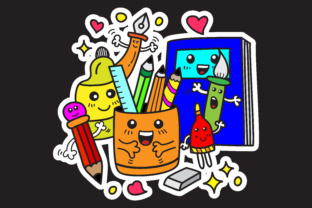
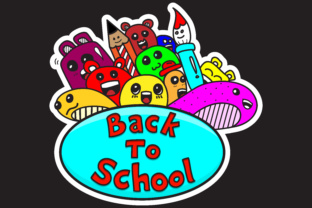
Illustration Hand Drawn is a broad descriptor for artwork that mimics the texture and imperfection of physical drawing. Rather than relying on perfectly smooth vectors or photorealistic rendering, these designs retain pencil-like strokes, uneven lines, and organic shapes. The Welcome Back to School doodles vector design sits squarely inside this category. It typically includes items like books, pencils, apples, school buses, chalkboards, graduation caps, and cheerful typography, all rendered in a loose, sketched style.
The key distinction here is intentional imperfection. A hand drawn illustration is not a mistake; it is a deliberate choice to communicate warmth, approachability, and creativity. In a world saturated with polished corporate imagery, these assets stand out because they feel personal. The Welcome Back to School doodles specifically aim to evoke nostalgia and excitement around the return to learning, making them a natural fit for seasonal campaigns and classroom environments.
Line Consistency and Weight Variation
Not all hand drawn vectors are created equal. Higher-quality sets show careful attention to line weight. Strokes that vary naturally, with thicker and thinner sections, suggest real pen or pencil pressure. This gives the artwork depth and movement. In contrast, uniform digital lines that merely look like rough edges often feel flat and mechanical. When evaluating a Welcome Back to School doodles vector set, look for samples where the linework breathes. The best collections preserve the rhythm of a human hand without becoming sloppy.
Color Palette and Composition
Hand drawn illustrations often pair well with muted or restrained color palettes. Many designers prefer monochrome black line art with occasional accent colors, while others offer fully colored doodles with watercolor-like fills. The practical advantage of a limited palette is flexibility. A set that relies on five or six complementary colors can be dropped into a wide variety of layouts without clashing with existing brand schemes. If the Welcome Back to School doodles use bright primaries, that works well for children's materials, but may be harder to integrate into more subdued professional presentations.
Scalability and Vector Integrity
One of the strongest arguments for choosing vector-based doodles over raster images is scalability. A well-constructed vector file will hold up at any size, from a tiny icon in a mobile app to a full-page poster. However, hand drawn vectors also have a downside here. Because they intentionally include small irregularities and loose endpoints, scaling them too large can exaggerate those imperfections. A small wobble in a line at 100% size can become a distracting jagged edge at 500%. The best sets keep these irregularities subtle enough that they remain charming rather than messy.
Real-World Performance and Usability
From a practical standpoint, the Welcome Back to School doodles vector design performs best when used as supplemental visual language. These are rarely standalone hero images. Instead, they function as decorative accents, margin fillers, bullet point replacements, or background elements. A well-designed back-to-school flyer might feature a hand drawn school bus as the central visual, but more often these assets appear as scattered doodles around a text block, adding energy without competing for attention.
In marketing contexts, such as email campaigns or social media graphics, hand drawn illustrations reduce the formality of the message. This can be a significant advantage when targeting parents or younger students. A brand that wants to appear friendly and approachable will benefit from the casual tone these vectors communicate. For example, a tutoring service promoting fall enrollment could use doodles of books and pencils to soften the sales pitch and create a more relational feel.
However, there are limitations. Hand drawn styles do not suit every brand identity. If your organization relies on precision, data, or a highly polished image, introducing loose sketches may feel inconsistent. A law firm or financial institution sending back-to-school content would likely be better served by clean, minimal iconography. The hand drawn aesthetic is a tool, not a universal solution, and its effectiveness depends heavily on context.
Flexibility Across Different Platforms and Formats
The Welcome Back to School doodles vector design is inherently modular. Most collections come with dozens of individual elements that can be rearranged, resized, recolored, and combined. This modularity is a major strength. A teacher creating a classroom newsletter might use a different set of doodles each week: apples and pencils one week, globes and test tubes the next. A social media manager could build a month of posts around one consistent doodle kit, changing only the composition and text overlays.
File format matters here. SVG files offer the greatest flexibility for web use, while EPS or AI files are better for print. A good vector set will include multiple formats so that users are not locked into one workflow. Additionally, some collections offer editable color swatches, allowing designers to match the doodles to their brand palette in seconds. That level of customization separates a useful asset from a one-use novelty.
Educators and School Administrators
Teachers, principals, and school communications staff frequently need to create materials that are engaging without being intimidating. Hand drawn doodles lower the visual barrier. A PTA flyer, a cafeteria menu, or a welcome packet all become more inviting when illustrated with simple, friendly sketches. Educators working with limited design resources can rely on these assets to produce professional-looking materials without hiring a graphic designer.
Small Business Owners and Entrepreneurs
Tutoring centers, after-school programs, educational toy stores, and children's book authors all operate in spaces where warmth matters. Hand drawn illustrations help small businesses compete visually with larger companies by offering a distinctive, personal look. A small business owner launching a back-to-school campaign can use Welcome Back to School doodles across their website, email list, and social channels to create a cohesive seasonal identity.
Freelance Designers and Creatives
Professional designers often collect hand drawn vector sets as a resource for quick client projects. When a client needs a fast turnaround on a school-related banner or brochure, having a reliable doodle set on hand cuts production time significantly. The best designers use these assets as a foundation, layering in custom elements or adjusting colors to match the client's brand, rather than dropping them in unchanged.
Bloggers and Content Creators
Parenting bloggers, educational content creators, and lifestyle influencers frequently need visuals that feel authentic and relatable. Stock photography can feel staged, but hand drawn doodles read as genuine and creative. A blogger writing about homework routines or back-to-school shopping tips can punctuate their posts with relevant sketches, making the page visually dynamic without overwhelming the text.
Limitations to Consider Before Committing
No creative asset is perfect for every situation, and the Welcome Back to School doodles vector design has clear boundaries. The most obvious limitation is thematic specificity. These illustrations are designed around a single seasonal concept. Once fall semester begins, their relevance narrows. You can repurpose some elements for general education content, but a doodle of a school bus will always signal back-to-school. If you need evergreen materials, you will need additional assets.
Another consideration is stylistic consistency across a larger project. If you combine doodles from different sets, differences in line quality, shading, and color palette become noticeable. A single set usually works well on its own, but mixing multiple hand drawn sources can create visual fragmentation. The safest approach is to purchase a comprehensive set from one creator and rely on it exclusively for the duration of a campaign.
Finally, hand drawn vectors can sometimes read as too informal for certain audiences. Higher education institutions, corporate training programs, or professional certification bodies may find the style undermines their credibility. In those contexts, clean vector icons or photography would be more appropriate.
Evaluating Long-Term Value
The lifespan of a hand drawn vector set depends entirely on how you use it. A collection of Welcome Back to School doodles purchased in July will see heavy use for two to three months, then go dormant until the following year. However, if you work in education or content creation year-round, these assets can be rotated back into use seasonally for years. The initial cost, often quite low for a digital download, pays for itself quickly if you create even a handful of materials.
(Note: We won't include a specific price, as it varies widely, but most reputable collections are priced between ten and thirty dollars for a full set of fifty to one hundred elements. Compare that to the cost of commissioning custom illustrations, and the value proposition is clear for budget-conscious teams.)
Practical Recommendations for Choosing a Set
If you decide that a hand drawn doodle collection fits your needs, focus on a few concrete criteria before purchasing. First, review the sample images for line quality and color consistency. Second, confirm that the set includes the specific elements you need. A set heavy on classroom objects but light on transportation may not work for a school bus campaign. Third, check the file formats. SVG and EPS are essential for vector editing. Fourth, look for a license that permits commercial use if you intend to sell products or services featuring the illustrations.
Also consider the artist or studio behind the set. Many independent illustrators sell through established marketplaces, and their style is often consistent across multiple collections. If you find a creator whose linework and color sense match your aesthetic, bookmark them. They may release complementary sets for holidays, seasonal events, or other educational themes, allowing you to build a cohesive library over time.
Final Assessment for Practical Buyers
The Welcome Back to School doodles vector design sits in a specific but valuable niche. It is not a tool for every project, nor is it a replacement for a complete visual identity system. What it offers is an efficient, affordable way to inject personality and warmth into seasonal materials. For educators, small business owners, and content creators who need to communicate approachability and enthusiasm, these assets deliver consistent results. The key is to use them intentionally, within the boundaries of their style, and with an understanding that their charm comes from imperfection. When matched with the right audience and context, hand drawn illustrations remain one of the most effective visual shortcuts to genuine human connection.