How the Right Visual Identity Can Transform Your Brand's Message
In an increasingly crowded digital landscape, standing out is no longer a luxury—it is a necessity. Every brand, creator, and entrepreneur faces the same fundamental challenge: how to capture attention long enough to deliver a message that resonates. One of the most effective, yet often overlooked, tools for achieving this is the strategic use of cohesive, character-driven illustration. The Back to School Cartoon Character Set represents more than a simple collection of images. It is a gateway to a visual language that connects with audiences on an emotional level, simplifies complex ideas, and creates a memorable brand presence. This article explores why professionals across industries are turning to such assets, how they fit into larger market and creative trends, and what makes them a practical investment for anyone serious about communication.
What Is the Back to School Cartoon Character Set?
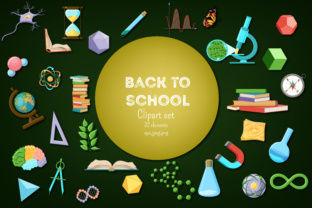
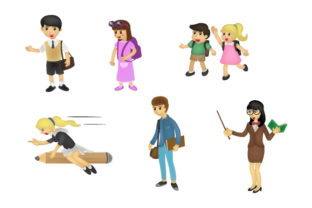
At its core, the Back to School Cartoon Character Set is a curated collection of illustrations designed around a unified theme. Typically rendered in a friendly, accessible style, these characters depict students, teachers, school supplies, and classroom scenarios. The set is often delivered in a ready-to-use format—commonly an Adobe Illustrator (AI) file alongside a high-resolution JPEG—allowing for immediate integration into a wide range of projects. The bundle format ensures that users receive not just a single image, but a library of assets that can be mixed, matched, and adapted.
What distinguishes this type of resource from generic stock photography is its deliberate design coherence. Every character shares a consistent art style, color palette, and level of detail. This cohesion is critical for branding, where visual consistency builds trust and recognition. For a freelancer creating a series of social media posts, a marketer designing a campaign, or an entrepreneur developing an educational app, having a set of characters that look like they belong together eliminates the jarring effect of mismatched visuals and saves hours of editing time.
The Broader Industry Trend: Visual Consistency as a Competitive Advantage
Across the creative and business landscape, there is a clear shift toward visual consistency as a component of brand strategy. Consumers today are exposed to thousands of marketing messages daily. Their brains have become adept at filtering out noise. What cuts through is repetition of a familiar visual signature. This is why major brands invest millions in style guides. However, small and medium-sized creators, freelancers, and startups have traditionally been priced out of this level of polish.
The rise of affordable, professionally designed asset bundles like the Back to School Cartoon Character Set is democratizing access to high-quality visual branding. No longer does a small business have to choose between hiring an expensive illustrator and using disjointed clip art. These sets provide a middle ground—a professional foundation that can be customized to fit a specific voice. This trend mirrors larger movements in the creator economy toward "toolkits" and "templates" that empower individuals to produce work that looks like it came from an agency.
Furthermore, the market for digital educational content is expanding rapidly. From online courses and tutoring platforms to educational YouTube channels and children's product packaging, the demand for approachable, non-intimidating visuals is high. Cartoon characters lower the barrier to entry for audiences. They signal warmth, safety, and simplicity. In an era where screen fatigue is real, soft, friendly illustration style offers a visual rest stop. It invites the viewer to stay a little longer.
Why People Are Paying Attention to Character Sets
The rising attention on character illustration sets can be traced to three converging factors: the explosion of digital content, the need for speed in production, and a growing understanding of visual psychology.
1. The Content Volume Challenge
A single brand today may need to produce multiple pieces of content per week—social media posts, blog headers, email newsletters, landing pages, presentation decks, and video thumbnails. Commissioning original art for each piece is impractical for most. A character set provides a reusable visual vocabulary. A single character can appear in dozens of contexts with minimal adjustments, providing continuity while saving time and budget.
2. Shortened Attention Spans and Emotional Hooks
Psychologically, humans are wired to respond to faces. Even a simple cartoon face triggers an emotional response faster than a block of text or an abstract graphic. Characters can express joy, curiosity, surprise, or determination, instantly setting the tone of a message. Marketers and educators alike are leveraging this by using characters as "guides" through content. The Back to School Cartoon Character Set allows creators to place a friendly face next to a headline, a call-to-action, or a piece of instruction, making the interaction feel more human.
3. Platform-Specific Optimization
Social media platforms, particularly Instagram, Pinterest, and TikTok, reward visually rich content that stops the scroll. Cartoon illustrations perform well in these environments because they are brightly colored, clean, and immediately scannable. They also tend to be mobile-friendly. A character that looks good on a large screen will typically read well on a small phone display. For professionals managing multi-platform campaigns, having a set of characters that can be resized and repurposed across channels is immensely practical.
Changing Workflows and the Rise of Modular Design
The way creative professionals work has evolved dramatically in the last five years. The old model—conceive a project, hire a specialist, wait for deliverables, revise, and finalize—is giving way to a more iterative, agile approach. Speed matters. Clients expect faster turnarounds. Freelancers need to maximize billable hours. In this environment, modular assets become a superpower.
The Back to School Cartoon Character Set is inherently modular. Because it is delivered as an AI file, users can isolate individual elements—a character's arm, a backpack, a chalkboard—and reposition them. They can change colors to match a brand palette. They can remove backgrounds, combine characters from different scenes, or scale elements up and down without losing quality. This level of control is essential for professionals who need to adapt a single asset to multiple formats without starting from scratch.
Consider a practical example: an education technology startup needs to create onboarding materials for a new learning app. With the character set, a designer can take one student character and place it in a welcome email, a product tutorial video, a help center article, and a social media announcement. The character becomes a recognizable mascot, building familiarity across touchpoints. Without the set, the designer would have to draw or source four different images, likely with stylistic inconsistencies. The set eliminates that friction.
Practical Applications Across Professions
The versatility of a well-crafted character set extends beyond obvious use cases. Here are several scenarios where such assets add tangible value:
Educational Content Creators and Course Developers
Whether you are producing worksheets, slide decks, or interactive modules, characters can serve as visual anchors. A confused-looking character next to a tricky concept can signal to the learner that it is okay to pause and re-read. A triumphant character at the end of a section provides positive reinforcement. The Back to School Cartoon Character Set gives educators a non-verbal way to guide emotional tone throughout a curriculum.
Small Business Owners and Ecommerce Marketers
A children's bookstore, a tutoring center, or a family-oriented brand can use these characters in email campaigns, website banners, and in-store signage. The set's school theme is particularly relevant for back-to-season promotions, but can be adapted year-round for any message about learning, growth, or preparation.
Freelance Designers and Social Media Managers
For creatives managing multiple clients, having a library of quality assets reduces the time spent sourcing visuals. The ability to open an AI file, edit a character's color shirt to match a client's brand, and export in one session is a workflow efficiency that compounds over time.
Corporate Communicators and HR Teams
Internal communications often struggle with engagement. A cartoon character can be used to illustrate company announcements, training materials, or wellness initiatives in a way that feels less formal and more approachable. It humanizes the corporate voice without sacrificing professionalism.
What Makes a Character Set "Good" vs. "Great"?
Not all illustration sets are created equal. A great set offers more than just attractive drawings. It provides flexibility, scalability, and contextual relevance. The Back to School Cartoon Character Set bundle—with its inclusion of both an editable AI file and a ready-to-use JPG—addresses two distinct user needs. The AI file is for those who want to customize, recolor, and recombine elements. The JPG is for quick, no-fuss use in presentations or social posts. This dual format acknowledges that professionals operate at different speeds and with varying levels of software access.
Additionally, a strong character set features a variety of poses, expressions, and props. This variety allows for storytelling. A single character standing with a book communicates something different than a character waving, pointing, or writing. When a set includes multiple characters, it also enables scenes of interaction—a teacher helping a student, two friends studying together—which are inherently more engaging than isolated figures. The best sets feel like a cast of actors ready to perform your script.
Connection to Larger Developments in Visual Culture
The growing popularity of illustration bundles is part of a broader cultural shift toward authenticity and warmth in visual communication. For years, the default for professional content was either photography (expensive and literal) or flat icons (functional but cold). Illustration occupies a middle ground. It is stylized enough to feel crafted, yet flexible enough to convey abstract concepts.
In the wake of remote work and digital-first interactions, audiences are craving connection. A hand-drawn or vector character feels personal in a way that a polished photograph sometimes does not. It suggests that a human being made a choice about how to represent an idea. This aligns with the larger movement toward "human-centered design," where empathy and emotional resonance are prioritized alongside functionality.
Furthermore, the school theme specifically taps into a universal experience. Almost everyone has a reference point for school—the nervous first day, the excitement of new supplies, the camaraderie of classmates. Using these familiar touchpoints in marketing or educational content creates an instant bridge between the message and the viewer's lived experience. It is a shortcut to relevance.
Observations on Implementation and Best Practices
To get the most out of a character set, professionals should think beyond simple decoration. A character should serve a narrative purpose. Ask: What is this character doing? What emotion are they conveying? How do they guide the viewer's eye? Placing a character looking toward the text of a headline, for example, draws attention to the copy. A character holding a blank sign offers a natural space for a call-to-action.
Color consistency is also critical. While the Back to School Cartoon Character Set arrives with its own palette, users should consider whether those colors align with their existing brand. If not, the AI file's editability allows for rapid recoloring. Matching the character's shirt to a brand's primary color, for example, instantly ties the illustration to the company identity.
Another observation: avoid overusing characters in a way that feels juvenile. While cartoon style is friendly, it can be deployed in sophisticated contexts when paired with clean typography and ample whitespace. A character used sparingly—as a visual accent rather than the entire composition—tends to feel more intentional and professional.
Looking Ahead: The Role of Asset Bundles in the Creative Economy
As artificial intelligence tools begin to handle more routine design tasks, the role of the human creator is shifting toward curation, strategy, and emotional intuition. Asset bundles like the Back to School Cartoon Character Set fit this new paradigm. They provide high-quality raw material that still requires human judgment to deploy effectively. The set does not tell you how to use it. It asks you to bring your context, your audience, and your purpose.
For professionals who want to stay agile, investing in a library of versatile, themed assets is a pragmatic choice. It reduces dependency on external creators for every minor visual need, allowing internal teams or freelancers to move faster. It also raises the baseline quality of output. When every piece of content can feature a polished, consistent illustration, the brand perception improves across the board.
The Back to School Cartoon Character Set is not merely a product. It is a tool for narrative efficiency. It compresses the time and cost of visual storytelling while expanding the range of stories a brand can tell. For anyone who communicates for a living—whether to teach, persuade, or connect—that kind of efficiency is not just useful. It is foundational.
Conclusion
Visual communication is no longer optional. It is the primary way most audiences experience a brand. The difference between being ignored and being remembered often comes down to the quality and consistency of the imagery used. The Back to School Cartoon Character Set, delivered as an AI and JPG bundle, offers a practical, professional-grade solution for creators and businesses who need to produce engaging content at scale. By understanding the trends that make character-driven illustration relevant—democratized access to design, the demand for emotional resonance, and the need for modular workflows—professionals can deploy this asset thoughtfully. The result is a brand voice that feels cohesive, human, and unmistakably ownable.