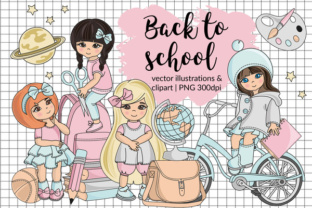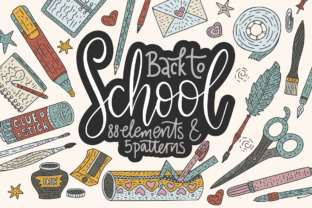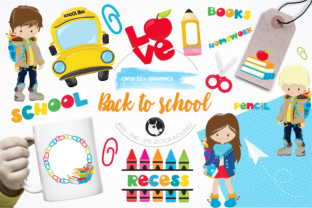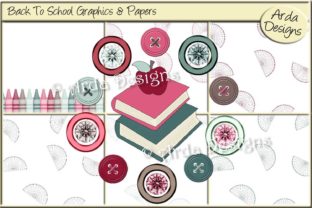
Back to School Graphics Papers: A Practical Guide to 12x12 Backgrounds and Digital Assets
When the back-to-school season approaches, the demand for themed visual resources rises sharply. Whether you are a teacher preparing classroom materials, a parent creating a first-day-of-school scrapbook, or a designer working on seasonal promotions, having the right graphics can significantly streamline your workflow. Back to School Graphics Papers, typically offered as 12x12 inch files in JPG and PNG formats, represent a popular and distinct category in this space. Understanding what these assets offer, how they compare with other design resources, and their practical tradeoffs is essential for making a smart purchasing or downloading decision.
What Defines Back to School Graphics Papers?
At their core, these are digital paper packs or graphic bundles centered on school-themed motifs. The 12x12 inch canvas is a long-standing standard in the scrapbooking and crafting industry, ensuring compatibility with traditional page layouts and popular design software. The inclusion of both JPG and PNG formats adds a layer of functional versatility. JPG files are ideal for full-page backgrounds due to their smaller file size and broad compatibility, making them a strong choice for printing. PNG files, on the other hand, offer transparent backgrounds, which is indispensable for layering elements like school bus icons, pencil graphics, or alphabet lettering over other images or colors. The cohesion of a well-curated collection is often its primary strength; a thoughtfully designed set provides a palette of coordinating patterns and accents that effectively eliminates the guesswork from creative projects.
JPG Versus PNG and the 12x12 Format: Examining the Tradeoffs
A fundamental step in evaluating these resources is understanding the inherent differences between the file formats and the specific size constraints. The strengths of one format are often the tradeoffs of the other.
JPG Backgrounds
These are typically full-bleed, 12x12 inch raster images. They are excellent for printing as physical scrapbook paper, creating slideshow backgrounds, or using as a base layer in digital compositions. The primary advantage is the balance between quality and file size. However, a notable tradeoff involves compression. JPGs use lossy compression, meaning some data is discarded to save space. While high-quality JPGs (saved at a high setting) look excellent, sharp lines or small text overlays on a highly compressed JPG may appear slightly softer than expected. For projects requiring crisp, vector-like precision, this is a factor to consider.
PNG Elements and Overlays
PNG files preserve transparency, which is their main advantage over JPGs. A 12x12 PNG might feature a large, single element like a vintage chalkboard, or a cluster of doodles on a transparent background. These are invaluable for digital invitations, classroom newsletters, or adding decorative flair to a presentation without the distraction of a white or colored box around the image. The tradeoff here is file size; PNGs can be significantly larger than JPGs, especially if they contain high-resolution images. They also do not support EXIF data as smoothly, though this is rarely a concern for crafting and design work.
The 12x12 Standard
This size translates directly to common square scrapbook albums and provides a generous canvas for design. However, a common practical challenge is that it often requires resizing for standard 8.5x11 documents, social media graphics, or classroom worksheets. A crucial decision factor is the resolution. Most high-quality Back to School Graphics Papers are offered at 300 DPI (dots per inch), which is the industry standard for professional-grade printing. If the resolution is lower, scaling the image up to fill a poster or large bulletin board could result in noticeable pixelation.
Comparing Themed Collections Versus Generic or Modular Assets
A frequent decision point for creators is whether to invest in a pre-made themed "Back to School" collection or to build a project from scratch using individual, generic elements. Each approach serves different needs and project scopes.
Strengths of a Themed Collection
Consistency is the main benefit here. In a well-designed pack, the colors, patterns, and motifs are created to work harmoniously together. This drastically reduces design time, which is a major advantage for busy teachers and parents. For a classroom bulletin board, a school memory book, or an event flyer, it provides an instant, cohesive aesthetic that is difficult to achieve when piecing together unrelated elements from different sources.
Tradeoffs and Limitations
The specific theme can be a limitation. A Back to School Graphics Paper pack might feature apples, rulers, alphabet blocks, and specific color palettes like red, yellow, and green. These elements are less adaptable for non-school projects, such as holiday cards or corporate presentations. Furthermore, the artistic style—whether cartoonish, vintage, minimalist, or watercolor—is fixed. If your project requires a tone that does not match the collection's style, the pack will not be the right fit, regardless of its quality.
When to Choose an Alternative
If you need highly formal business headers, a photo-centric layout that requires subtle textures, or a very specific color palette that diverges from the typical school motif, a themed paper pack might feel too restrictive or visually busy. In these cases, selecting individual textures, solid cardstocks, or modular icon sets offers more granular control over the final output. The best choice depends entirely on whether the project benefits more from speed and cohesion or from flexibility and specificity.
Evaluating Quality and Best-Fit Scenarios
Not all graphics papers are created equal, and evaluating a pack requires looking beyond the preview images. Practical testing and realistic scenario planning are essential.
Realistic Example 1: Teacher's Welcome Packet
A teacher preparing a welcome packet for the first day of school will find a set of Back to School Graphics Papers in JPG format to be an excellent choice. They can use a subtle striped pattern as the background for a welcome letter and a polka dot pattern for a matching supply list. The 12x12 size can easily be scaled down to 8.5x11 without losing significant quality. The accompanying PNG elements can be used to create name tags, book labels, or decorative borders on a classroom door. The time saved by using a pre-coordinated set versus designing everything from scratch is substantial.
Realistic Example 2: Digital Scrapbooking
A parent documenting their child's first day of kindergarten will benefit greatly from the combination of formats. A large, transparent PNG of a school bus or a chalkboard frame can serve as a photo mat or page title. Meanwhile, the JPG backgrounds provide a solid, patterned base for the page. This workflow is highly efficient and produces a professional-looking layout that feels intentional and polished.
Realistic Example 3: Social Media Promotion
A small business owner running a back-to-school sale might find the 12x12 format less convenient for social media. While the graphics themselves are high-quality, they often require cropping or resizing for 1:1 Instagram squares or 16:9 video thumbnails. The prominent school motifs might also clash with specific product photography. In this scenario, assets optimized for social media dimensions or a set of minimalist, neutral patterns might be a better investment, even though the core quality of the paper pack is high.
Decision Factors: Is a Themed Paper Pack Right for You?
To make an informed choice, consider the following practical criteria before committing to a specific collection of Back to School Graphics Papers.
- Project Timeline: If you need a quick, coordinated result without hours of searching, a pre-made collection is a strong and efficient choice. Creating custom graphics or matching patterns from scratch takes significantly longer.
- Intended Output Medium: Print projects, such as scrapbooks, posters, and classroom decor, benefit most from the high-resolution 12x12 JPGs. Digital-only projects, such as digital planners or web graphics, leverage the transparent PNGs most effectively.
- Aesthetic Flexibility: If you have a very specific vision and require control over every color and detail, a themed pack may feel restrictive. If you are open to working within a professionally designed palette, it will feel liberating and inspiring.
- Long-Term Value: Niche themed packs offer high value for specific projects but may only be used during one season of the year. Consider the cost per use. If you have multiple projects lined up, the investment is easily justified.
Making a Confident Selection
When browsing collections, look for clarity in the product description. Confirm the number of JPGs and PNGs included, and verify the DPI. A standard for high-quality print is 300 DPI. Determine whether elements are individually cropped and ready to use, or if they are grouped on a single page requiring manual extraction. Reviewing detailed previews that show the actual patterns and element sizes is essential for understanding what you are getting. Ultimately, the right graphics resource depends on the specific demands of your project. By weighing the convenience and cohesion of a themed collection against the flexibility of generic assets, you can select the tool that best supports your creative goals, ensuring a smooth and effective design process for your back-to-school projects.