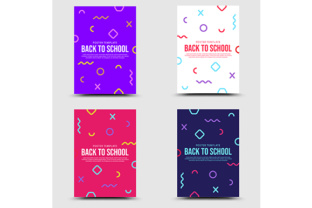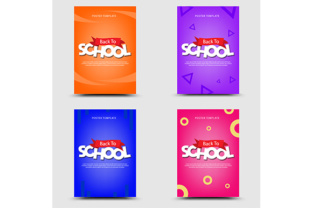
Evaluating Back to School Poster Templates for Your Campaign Needs
Creating effective back-to-school marketing materials requires a balance of timely messaging, visual appeal, and practical production workflows. Many educators, small business owners, and school administrators turn to pre-designed resources to streamline this process. Among the available options, Back to School Poster Templates offered as a ZIP Folder containing one JPG file and one EPS file represent a specific type of ready-to-use design asset. Understanding how this format fits into the broader landscape of design resources can help you decide whether it aligns with your project requirements, skill level, and timeline.
This article explores what Back to School Poster Templates in this particular format offer, how they compare with alternative approaches, and the factors that matter most when choosing a template for your next campaign. Rather than presenting one option as universally superior, we will examine the practical tradeoffs so you can make a more informed decision based on your specific context.
What Back to School Poster Templates in a ZIP Folder Provide
At its core, a Back to School Poster Templates package delivered as a ZIP folder containing one JPG file and one EPS file gives you two distinct ways to work with the same design. The JPG file is a flattened, rasterized image that you can use immediately for digital display, social media posts, or quick printing without any additional software. The EPS file is a vector-based format that retains layers, editable text, and scalable artwork, intended for users who have access to vector editing applications such as Adobe Illustrator, CorelDRAW, or Affinity Designer.
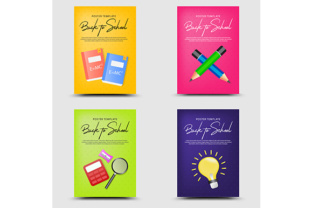
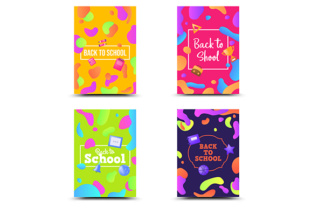
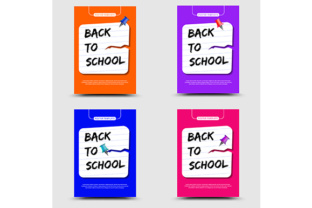
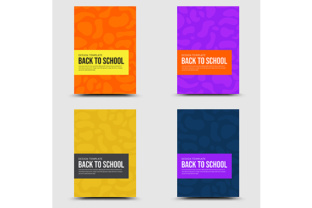
This dual-format approach is distinct because it accommodates both users who need a finished product right away and those who want to customize colors, replace text, or adjust layout elements. The ZIP folder itself is a common compression format that keeps the two files organized and reduces download size, making it easy to store or transfer. The template typically includes placeholder text and imagery related to the back-to-school season—such as school supplies, classroom motifs, or academic themes—so you are not starting from a blank canvas.
What makes this offering distinct is the combination of accessibility and flexibility. You do not need to be a professional designer to use the JPG file, yet the EPS file provides room for deeper customization if your workflow demands it. This dual-track approach is less common than single-format templates, and it can be a practical middle ground for teams with mixed skill levels or for individuals who may need to hand off the file to a print shop or collaborator.
Comparing This Format with Other Template Options
When evaluating Back to School Poster Templates, it helps to consider the full range of formats and delivery methods available. Many template marketplaces offer designs exclusively as editable PSD files for Adobe Photoshop, which provide layers and text editing but require familiarity with that specific software. Others offer AI files for Illustrator or INDD files for InDesign, each with their own learning curve and software dependency. Some platforms now provide cloud-based templates that you edit directly in a browser, eliminating the need for installed applications altogether.
The JPG-plus-EPS combination occupies a particular niche. Compared to a PSD-only template, the EPS file offers better cross-software compatibility because the Encapsulated PostScript format can be opened in a wider range of vector editing tools, including open-source options like Inkscape. The JPG component, while not editable, gives you an immediate preview and a usable file for scenarios where customization is unnecessary. This contrasts with templates that are locked into a single ecosystem, which may limit your ability to share the file with collaborators who use different software.
On the other hand, cloud-based template editors offer real-time collaboration and no software installation, which can be advantageous for teams working remotely. However, these platforms often require ongoing subscriptions, and your design files remain tied to that service. The offline, portable nature of a ZIP folder with JPG and EPS files means you own the files outright, can use them without an internet connection, and are not locked into a recurring payment model.
Another common alternative is hiring a freelance designer to create a custom poster from scratch. This route provides unique, tailored artwork, but it typically involves higher cost, longer turnaround times, and back-and-forth revisions. A template approach, by contrast, gives you a professional starting point at a fraction of the cost, though you sacrifice originality and may need to adapt the design to fit your specific brand or message.
Vector versus Raster: A Core Distinction
Understanding the difference between the two file types in the Back to School Poster Templates ZIP folder is key to using them effectively. The JPG file is a raster image composed of pixels. It works well at its native resolution for digital use and small-format printing, but enlarging it beyond its original dimensions can result in pixelation or loss of clarity. The EPS file is vector-based, meaning it uses mathematical paths to define shapes and lines. You can scale a vector file to any size—from a business card to a billboard—without any degradation in quality.
If your back-to-school poster will be printed at a large size, such as a 24-by-36-inch classroom poster or a storefront display, the EPS file gives you the flexibility to output at high resolution regardless of scale. If you are posting the design on social media or including it in a digital newsletter, the JPG file is likely sufficient and more convenient to use without additional software. Having both options in one ZIP folder means you can choose the format that matches your final output without needing to convert files or request a different version from the seller.
Strengths and Practical Tradeoffs
One of the main strengths of the Back to School Poster Templates in this format is the low barrier to entry. The JPG file is immediately usable by anyone with a computer or smartphone, no design experience required. You can drag it into a document, attach it to an email, or upload it to a printing service within seconds. For time-sensitive campaigns, such as a last-minute welcome event or a weekly sale, this can be a significant advantage.
The EPS file, meanwhile, offers professional-grade customization. If you need to change the school name, update the event date, or swap out a graphic element, you can do so in a vector editing program. This is especially valuable if you plan to reuse the template across multiple terms or events with minor updates each time. The ability to edit text, recolor elements, and adjust composition means one purchase can serve many iterations, extending the value of the initial investment.
However, there are tradeoffs to consider. The EPS file requires vector editing software, which not everyone owns or knows how to use. If you are a teacher with limited design resources or a small business owner who primarily works with office software, you may find the EPS component inaccessible. In that case, the JPG file is still useful, but you lose the customization capability that makes the EPS format worthwhile. Some template providers address this by also including a PDF or a Microsoft Word version, but this particular package does not include those alternatives.
Another tradeoff involves the quality and uniqueness of the design itself. Like all templates, Back to School Poster Templates purchased from a marketplace are designed to appeal to a broad audience. You may encounter the same or similar designs used by other schools or businesses in your area, especially if the template is popular. Customizing the EPS file can help differentiate your poster, but the core layout and imagery remain based on a generic concept. If standing out visually is critical for your brand or event, a custom design or a highly niche template may be a better fit.
The JPG file also has inherent limitations for print production. While it can produce acceptable results for small quantities and standard sizes, professional printers often prefer high-resolution TIFF, PDF, or vector files for large runs or specialty finishes. If your back-to-school poster will be mass-produced or requires precise color matching, you may need to work from the EPS file and output a print-ready PDF rather than relying on the JPG.
Best-Fit Situations for This Template Format
The Back to School Poster Templates delivered as a ZIP folder with JPG and EPS files are well-suited to several common scenarios. If you are an individual classroom teacher creating a welcome poster for your door, a schedule display, or a bulletin board header, the JPG file gives you an instant solution that you can print on standard office paper or cardstock. You do not need to learn new software or wait for a designer to get back to you.
If you are a school administrator or PTA volunteer coordinating multiple posters for a back-to-school night, open house, or fundraising event, the EPS file allows you to create a consistent visual theme across all materials. You can edit each poster individually, ensuring that the event name, date, and location are correct while maintaining the same design language. This consistency can strengthen event branding and make your communications look more professional.
Small business owners running back-to-school promotions—such as stationery shops, tutoring centers, uniform suppliers, or after-school program providers—may find this template format useful for both in-store signage and digital marketing. The JPG file can be posted on social media platforms, included in email newsletters, or uploaded to your website, while the EPS file can be sent to a local print shop for larger banners or window displays.
Another strong use case is for users who work across different devices or operating systems. Because the EPS format is platform-agnostic and the JPG file is universally readable, you can move the files between a Windows PC, a Mac, or even a tablet without compatibility issues. This flexibility is especially helpful if you collaborate with volunteers, student helpers, or remote team members who may not all use the same hardware or software.
When You May Need a Different Approach
Despite its strengths, this format is not the right fit for every situation. If your primary need is for a design that can be edited in word processing or presentation software—such as Microsoft Word, PowerPoint, or Google Slides—the EPS and JPG files will not work directly. You would need to insert the JPG as an image, but you would not be able to edit the text or graphics natively within those applications. In that case, a template offered in PPTX or DOCX format would be more practical.
If your back-to-school campaign involves a large volume of unique posters with different text and images for each one, the manual editing required for EPS files may become time-consuming. A template with linked data fields or a variable data printing feature would be more efficient for such a workload. Alternatively, a cloud-based design tool with a template library and drag-and-drop editing might save significant time if you need to produce many variations quickly.
For users who prioritize absolute originality and brand distinctiveness, a template—no matter how well-designed—will always carry the risk of looking generic. If your school or business has specific brand guidelines including unique fonts, color codes, and logo placements, you may spend as much time customizing the EPS file as you would creating a layout from scratch. In such cases, commissioning a custom design or building your own template from a blank document might ultimately be more efficient and produce a better result.
Also consider the learning curve. While the JPG file requires zero training, the EPS file does require familiarity with vector software. If no one on your team has experience with Adobe Illustrator or a comparable application, the EPS component may go unused. You could hire a designer to edit the EPS file for you, but that adds cost and turnaround time, potentially negating the convenience of using a template in the first place.
Decision Factors to Keep in Mind
When evaluating Back to School Poster Templates in ZIP folder format, start by clarifying your intended output. Will the poster be used primarily on screens, or will it be printed? At what size? In what quantity? If digital use and small-format printing are your main goals, the JPG file will likely serve you well. If large-format printing or repeated reuse with edits is in your future, the EPS file becomes the more important asset.
Next, assess your team's software access and skill level. If you have someone who can work with EPS files, the template offers significant value. If not, consider whether the JPG alone is enough for your needs, or whether you would be better served by a different template format that aligns with the tools you already use.
Consider the timeline. Templates in this format are typically available for immediate download after purchase, which means you can start working on your poster within minutes. Custom design work or learning a new software application would delay your project. For urgent campaigns, the ready-to-use nature of the JPG file is a clear advantage.
Finally, think about long-term use. If you anticipate creating back-to-school materials year after year, the EPS file's editability means you can update the design each season without repurchasing. This makes the upfront cost more economical over time compared to single-use custom designs or subscription-based platforms that require ongoing payments.
Making an Informed Choice
The best choice depends on your specific context: your design skills, the software you have access to, your printing requirements, and how much customization you need. Back to School Poster Templates in a ZIP folder with one JPG and one EPS file offer a practical hybrid approach that balances immediate usability with future flexibility. They are neither the most advanced nor the most beginner-friendly option, but they occupy a useful middle ground for many back-to-school projects.
By understanding what each file format does well and where it falls short, you can match the template to the task at hand. Whether you opt for this format or choose an alternative, the key is to align your resource with your actual workflow. A template that fits your process will save you time and reduce stress; one that does not will add friction regardless of how attractive the design may be.
Take stock of your needs, compare the formats and their tradeoffs, and select the template approach that gives you the best balance of convenience, control, and quality for your back-to-school communication goals.