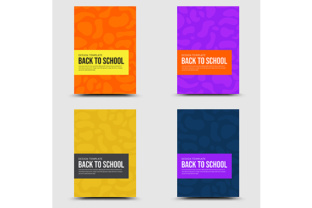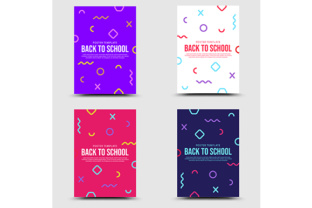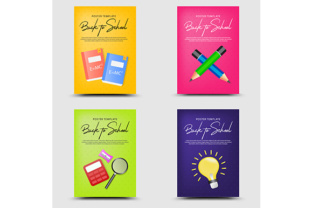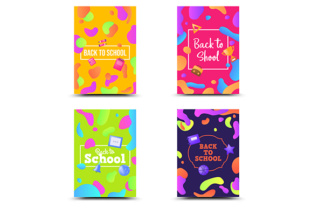
The Back to School Poster Pushpin: A Design Asset for Versatile Campaigns
When the late summer air shifts and stores begin stocking notebooks and fresh pencils, the visual language of back-to-school season takes over. Among the many motifs—apples, chalkboards, buses, and rulers—the pushpin stands out as a surprisingly powerful symbol. It evokes organization, display, and the act of pinning down important information. The Back to School Poster Pushpin serves as more than a simple icon; it represents a design element that anchors attention and communicates purpose. This article explores how this specific visual asset, packaged alongside its vector counterpart in a Back to School Poster Pushpin 1 ZIP Folder, offers practical value for a wide range of users, from classroom teachers to marketing professionals.
Why the Pushpin Works as a Visual Anchor
Consider the environments where back-to-school materials appear. Bulletin boards, hallways, social media feeds, emails, and printed handouts all compete for attention. The pushpin, by its nature, suggests focus. It is the point where a notice is held in place. When used as a graphic element on a poster, it directs the viewer's eye toward essential information: event dates, supply lists, classroom rules, or enrollment deadlines. The Back to School Poster Pushpin taps into this cognitive association. A viewer instantly recognizes the implication of importance and organization, without needing any text to explain the visual cue. This makes it a highly efficient communication tool in crowded spaces, both physical and digital.
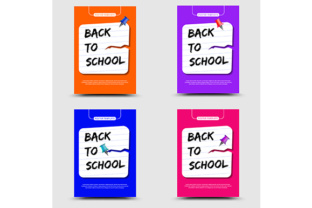
From a design perspective, the pushpin offers geometric simplicity. Its round head, slender needle, and shadow or highlight details create a shape that works well when repeated, scaled, or isolated. As a decorative accent around a central message, it adds texture and visual interest. In a school setting, a poster using multiple pushpins as bullet points can subtly reinforce the theme of being arranged and prepared—qualities highly relevant to the back-to-school transition. For a business marketing to parents or educators, this imagery builds an immediate contextual connection that feels authentic rather than forced.
Inside the ZIP Folder: Understanding the File Formats
The Back to School Poster Pushpin 1 ZIP Folder typically contains two essential files: a JPG and an EPS. These are not arbitrary choices. Each format serves a distinct purpose in a designer’s or educator's workflow. Understanding when to use each format is crucial to getting the most out of the asset. The JPG file provides a ready-to-use raster image, perfect for quick placement in documents, web graphics, and presentations. Its compatibility is nearly universal—any device or software can open it without issue. For a hobbyist creating a classroom flyer in a word processor, the JPG is the immediate, no-fuss solution.
The EPS file, on the other hand, represents the vector version of the same Back to School Poster Pushpin. Vector files do not rely on pixels; they store image data as mathematical curves and points. This means the pushpin can be scaled to the size of a billboard or reduced to a tiny icon without losing any sharpness. For professionals using Adobe Illustrator, CorelDRAW, or Affinity Designer, the EPS file is the starting point for customization. They can change the color of the pushpin head from red to blue to match a school’s brand, adjust the metallic highlight on the pin shaft, or combine the pushpin with other vector elements to build an entirely new composition.
Workflow Advantages for Different User Groups
The combination of raster and vector files inside a single ZIP folder addresses a real fragmentation in the creative community. Many small business owners, for instance, may only have access to basic office software. They need the JPG. Meanwhile, their contracted designer expects the EPS for professional manipulation. Having both files in one download streamlines collaboration. The educator who wants to print a large-format poster for the school lobby can send the EPS to the print shop while using the JPG for a quick social media post. This dual-format approach removes friction from the production pipeline.
- For Educators and School Staff: The JPG version allows for immediate use in newsletters, classroom handouts, and bulletin board headers. No special software is required. Right-click, insert, and print.
- For Graphic Designers and Creatives: The EPS file opens up creative control. Layers can be separated, colors re-mapped, and the pushpin integrated into broader compositions such as infographics, illustrated banners, or animated explainers.
- For Marketing Professionals and Business Owners: Having both formats means faster turnaround. A campaign can launch on social media with the JPG while the EPS is used to produce high-resolution print materials for direct mail or in-store signage.
- For Hobbyists and Content Creators: Even without formal design training, the JPG is an accessible asset that can be incorporated into slideshows, video thumbnails, or blog post featured images with minimal effort.
Real-World Application: Campaign Consistency Across Channels
Imagine a school district launching a unified back-to-school campaign. The theme is "Get Ready, Get Set." Each school needs posters, social media graphics, and digital signage. The Back to School Poster Pushpin serves as the recurring motif. A central design team creates a master layout using the EPS file, ensuring the pushpin has the exact same proportions and color code across all materials. They then export JPG versions for each school's social media manager. The consistency reinforces the campaign message. When parents see the pushpin on a Facebook post and later on a printed flyer in the school hallway, they immediately connect the two pieces of communication. This visual thread builds recognition and trust without requiring elaborate rebranding.
On a smaller scale, a single classroom teacher can use the same asset to create a coherent set of materials. A welcome letter, a schedule card, and a supply list all featuring the pushpin icon create a sense of order. Students and parents perceive the teacher as organized and prepared—an important psychological benefit at the start of a busy academic year. The pushpin, in this context, becomes a silent spokesperson for efficiency.
Technical Considerations When Using the Assets
While the JPG and EPS files in the Back to School Poster Pushpin 1 ZIP Folder are designed for broad compatibility, there are a few points worth noting. The JPG file, being raster-based, has a fixed resolution. Printing it at a very large size may reveal pixelation if the original resolution is too low. It is always wise to check the dimensions before committing to a large-format output. Typically, JPGs provided in professional ZIP folders are high resolution (300 dpi or above), but confirming this avoids disappointment.
The EPS file, meanwhile, may require a specific workflow. Some web browsers cannot preview EPS files natively. Opening the ZIP folder on a computer without design software might show only a generic file icon. This is expected. The EPS is meant to be placed into a vector editing application. Once inside the software, the pushpin renders perfectly. Users who do not own such software should rely on the JPG. Another consideration: EPS files can embed fonts or complex effects. The Back to School Poster Pushpin is typically a simple illustration, so font embedding is rarely an issue. However, checking layer structure in the EPS can help users separate the pushpin from any background elements if needed.
Observations on Design Trends and the Pushpin Motif
Over recent years, the aesthetic of back-to-school materials has shifted from overly cluttered designs toward cleaner, more icon-driven communication. The pushpin fits perfectly into this trend. Its minimal silhouette works well with flat design, modern illustration styles, and even isometric or 3D rendering. When a design uses a pushpin as a central element, it signals a break from the generic school-themed clip art of the past. It suggests a purposeful, contemporary approach. For brands that want to appear both educational and modern, the Back to School Poster Pushpin offers a versatile building block that can be used year after year with minor seasonal color updates.
Additionally, the pushpin motif lends itself well to interactive content. In a digital newsletter, a pushpin icon can serve as a clickable button linking to a registration form. In an email header, it can draw attention to a specific call to action. The symbolic meaning—pinning something important—directly supports user behavior guidance. Designers who recognize this can leverage the asset not just as decoration, but as a functional interface element.
Practical Steps for Getting the Most Out of the ZIP Folder
Upon downloading the Back to School Poster Pushpin 1 ZIP Folder, the first step is to extract the files. On most operating systems, a simple right-click and "Extract All" command will make the JPG and EPS accessible. It is helpful to store both files in an organized asset library, perhaps under a folder named "Icons" or "Back to School." Naming conventions matter—keeping the original filenames ensures you can locate the vector version later if needed.
- Inspect the JPG first. Open it to see the default appearance. Note the colors, shadow depth, and size. This gives you a baseline idea of the design intent.
- Open the EPS in your chosen vector software. If you use Adobe Illustrator, drag the file directly onto the artboard. Check if the pushpin is grouped, and if so, ungroup it to access individual parts.
- Experiment with color variations. Create multiple versions of the pushpin—red for urgency, green for positive information, yellow for friendly reminders. Generate a JPG export for each variation.
- Build a small library of layouts. Combine the pushpin with typography and other simple shapes. Test how it looks in a horizontal banner versus a vertical flyer. The flexibility of the vector file allows for rapid experimentation.
- Prepare both print and digital exports. From the same EPS, you can produce a high-resolution JPG for printing and a compressed PNG or SVG for web use. This ensures your back-to-school campaign looks sharp everywhere.
The Role of Semantic Consistency in Asset Use
One often overlooked aspect of using symbolic assets like the pushpin is semantic consistency. If the pushpin appears in one poster to denote "important notice," it should carry that same meaning across all materials. Changing its meaning—using it as a mere bullet point in one document and as a primary headline accent in another—confuses the audience. The Back to School Poster Pushpin works best when it is assigned a clear role within your visual vocabulary. For a school district, the pushpin might always point to deadlines. For a retailer, it might indicate sale items or special offers. Establishing this convention early makes the asset more valuable over time.
This principle extends to the technical handling of the files. If you customize the EPS for one application, document that change. Otherwise, months later, you may find yourself wondering why the pushpin in your social media kit looks different from the one in your print collateral. Maintaining a single source file—the original EPS—and exporting all variations from it ensures uniformity. The ZIP folder provides that source. How you manage it determines whether the asset becomes a consistent brand element or just another graphic in a chaotic folder.
Final Observations on the Pushpin as a Seasonal Staple
Seasonal design assets often fall into two categories: overly generic or too niche to reuse. The Back to School Poster Pushpin occupies a middle ground that makes it unusually resilient. While it is perfectly themed for August and September campaigns, its utility extends beyond the strict back-to-school window. A pushpin icon can reappear during parent-teacher conference announcements, exam schedule posters, or even end-of-year recap materials. The association with organization and notice remains relevant throughout the academic calendar. By investing time in understanding the JPG and EPS files inside the Back to School Poster Pushpin 1 ZIP Folder, users gain a resource that pays dividends far beyond the first day of school.
Whether you are a designer fine-tuning a district-wide brand, a teacher making your classroom feel welcoming, or a small business owner targeting families, the pushpin delivers clarity. Its simplicity is its strength. The ZIP folder containing both raster and vector formats ensures that no matter your technical skill level, you have access to the right tool for your specific output. And that, ultimately, is what makes a design asset truly helpful: not just the beauty of the icon itself, but the ease with which it can be put to real, practical use.