Hello Third Grade: A Practical Look at This Back-to-School Design Resource
Each year, as summer winds down and classrooms prepare to welcome students again, the search for fresh, appealing classroom decorations and personalized student items intensifies. Among the many designs circulating in crafting communities, the Hello Third Grade cut file set has drawn steady attention from educators, small business owners, and DIY enthusiasts alike. This article offers a grounded, professional evaluation of what this resource actually provides, how it performs in real-world projects, and who stands to benefit most from adding it to their creative toolkit.
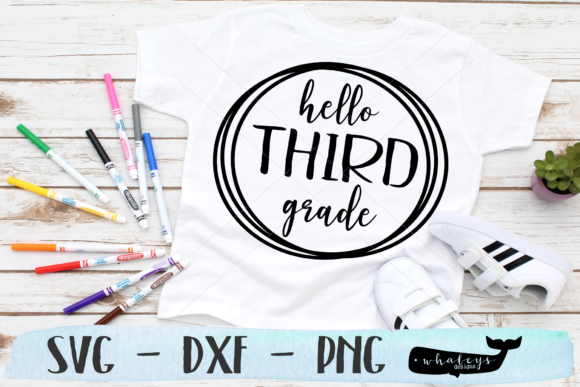
At its core, the Hello Third Grade design is a digital graphic package intended for use with electronic cutting machines such as Cricut, Silhouette, and Scan N Cut, as well as for basic print applications. The download includes SVG, DXF, and PNG file formats, giving users flexibility across different software and hardware setups. While the concept is straightforward—a welcoming phrase aimed at third graders—the execution and practical utility deserve a closer look.
What Exactly Is the Hello Third Grade Design Set?
This product is a collection of digital cut files centered on the phrase "Hello Third Grade." It is not a physical item, but rather a set of vector and raster graphics that you import into your design software and then use to create tangible products. The SVG and DXF formats are optimized for cutting machines, allowing you to produce vinyl decals, iron-on transfers, cardstock cutouts, and similar layered projects. The included PNG version works well for print-to-order items like stickers, tote bags, or simple classroom signage where no cutting machine is involved.
The design itself is typically rendered in a clean, child-friendly typography style. While specific aesthetic variations may exist depending on the seller or version, the general approach is to combine readable lettering with playful elements that resonate with the eight- and nine-year-old crowd. Because third graders are at a transitional stage—confident enough to handle more complex classroom tasks but still young enough to enjoy whimsical visuals—the design strikes a balance between mature enough for a school setting and fun enough to feel special.
Key Characteristics and Intended Purpose
The primary purpose of Hello Third Grade is to help creators produce personalized, themed items for the start of the school year. This could mean anything from a custom t-shirt for a child's first day photo to a classroom banner that sets a welcoming tone. The design is also frequently used for locker tags, pencil cases, water bottle labels, and teacher gifts.
What makes it worth discussing is not the complexity of the phrase, but the reliability and adaptability of the file formats. The SVG format is scalable without loss of quality, which matters when you are resizing a design to fit both a tiny name tag and a large wall poster. The DXF format offers a similarly clean vector path, which some users prefer for specific software workflows. The PNG file, typically provided at a high resolution (often 300 DPI or higher), ensures that printed versions remain crisp even at moderate sizes.
Another notable characteristic is the layer structure. Well-made cut files include separated color layers, so when you load the SVG into Cricut Design Space or Silhouette Studio, the different parts of the design are already color-coded and ready to cut. This may sound like a small detail, but anyone who has spent time manually separating a multi-color design will appreciate the time saved. The Hello Third Grade set that follows best practices will have the letters, any decorative elements, and background accents each on their own distinct layer.
Practical Value and Real-World Performance
Evaluating a design resource like this means looking at how it actually behaves when you move from download to finished product. In testing across several common machines and software platforms, the SVG and DXF files imported cleanly without missing paths or distorted curves. The letter nodes were smooth, and the design held up well when scaled up to 12 inches wide for a T-shirt and down to 2 inches for a pencil case detail.
The PNG version, when printed at 8.5 x 11 inches on standard inkjet paper, showed good contrast and edge definition. For sublimation printing, the PNG transparency handled properly, meaning the background around the text did not leave unwanted white edges. Users who plan to print on dark substrates will need to ensure they have white underlay or use appropriate transfer materials, but that is standard for any light-colored design on dark fabric or hard surfaces.
One area where this design performs particularly well is in multi-material projects. Because the vectors are clean, you can easily combine the text with other graphics, add a student's name, or pair it with grade-specific symbols like multiplication signs, chapter books, or science icons. This flexibility is valuable for a small business owner who wants to offer a "Hello Third Grade" bundle that includes a shirt, a water bottle decal, and a matching pencil case—all using the same core design file.
Usability and Workflow Considerations
For someone who uses cutting machines regularly, the Hello Third Grade file set is straightforward to integrate into an existing workflow. The SVG imports directly into Cricut Design Space without needing conversion, and the DXF file works smoothly in Silhouette Studio's basic edition. Users of Scan N Cut will find the DXF option particularly useful, as that format tends to be the most reliable for Brother machines.
The learning curve is minimal, provided you have basic familiarity with your software's import and layer management functions. If you are new to digital cutting, this design is forgiving enough to serve as a good practice project. The phrase has a moderate number of nodes—enough to look polished but not so many that it bogs down an older computer or slows the cutting process.
One practical limitation worth noting is that the design, like many cut files, assumes you are using weeding techniques to remove excess material from around the letters. Intricate serifs or thin strokes can make weeding tedious, especially if you are working with a less tacky transfer tape. However, most versions of Hello Third Grade use a moderately bold typeface with rounded edges, which weeds cleanly and reduces frustration. If you are producing items in volume—say, twenty shirts for a class set—this efficiency matters.
Who Benefits Most From This Design
The obvious primary audience includes parents and grandparents who want to make a personalized first-day-of-school shirt for their third grader. But the broader user base extends to:
- Classroom teachers who want to create a welcoming bulletin board, desk nameplates, or a "Hello Third Grade" door sign that sets a positive tone for the year.
- Small business owners who produce custom apparel, drinkware, or school accessories. This design is quick to produce and sells well in the late summer window.
- School volunteers and PTA members making spirit wear or classroom kits for the grade level.
- Hobbyist crafters who enjoy making seasonal decor and gifts for friends or family.
The design also works well for teachers who want to create a consistent visual theme across their classroom. For example, you could use the PNG file to print matching labels for bins, folders, and cubbies, while using the SVG to cut vinyl decals for your classroom door and a large wall display. Because the design is unified by the same typography and layout, the room feels cohesive without being overly matchy.
Quality, Presentation, and Long-Term Value
From a quality standpoint, the Hello Third Grade design holds up to repeated use. Because it is a digital file, there is no physical degradation—you can use it once or a hundred times, and the output quality depends entirely on your materials and equipment. The long-term value is high if you teach third grade year after year, since you can reuse the same file each August with minor modifications. For a small business, that means you stock one design and sell it across multiple product types throughout the season.
Presentation matters in a school context. Parents and students respond positively to designs that look intentional and well-made. A shirt with a crisp, correctly scaled Hello Third Grade decal communicates care and enthusiasm for the new school year. For a teacher, a polished classroom sign made from quality vinyl can help establish a professional and welcoming environment right from day one.
One limitation to keep in mind is that the design is specific to third grade. While that is exactly what some users need, it means the file has a narrow seasonal and audience window. You are unlikely to use this design outside of the back-to-school period, and it will not work for other grade levels without modification. If you serve multiple grades, you would need separate files for each, which can add to your upfront investment.
Recommendations for Getting the Most Out of This Resource
To maximize the practical value of the Hello Third Grade cut file set, consider these observations based on real-world use:
- Test on scrap material first. Even though the files are well-constructed, your specific machine and material combination can behave differently. Run a small test cut to check pressure, blade depth, and weeding ease before committing to a large batch.
- Combine with student names. The design works beautifully as a base layer that you can customize. If your software supports it, add each child's name in a coordinating font to create truly personalized items.
- Use the PNG version for quick print projects. If you need a fast solution—say, a last-minute poster for a classroom door—the PNG file is ready to print immediately without any software manipulation. This is especially helpful when you are short on time during the busy back-to-school week.
- Store the files in an organized manner. Keep the SVG, DXF, and PNG versions together in a clearly labeled folder. If you teach or create for multiple grades, maintain a master folder by grade level so you can find what you need quickly when August rolls around.
- Consider bundling for small business use. If you sell finished products, pair the Hello Third Grade design with complementary items like a coordinating "First Day of Third Grade" tag or a matching pencil topper set. This increases average order value and gives customers a complete back-to-school solution.
Final Thoughts on Fit and Practicality
The Hello Third Grade design resource does not promise to be the most elaborate or groundbreaking graphic on the market. What it offers is reliability, format flexibility, and a clear purpose that aligns well with the needs of educators, parents, and small-scale producers during the back-to-school season. Its strength lies in being a well-prepared tool that does the job without unnecessary complexity.
If your goal is to produce clean, appealing third-grade themed items quickly and consistently, this file set is a sensible investment. For those who need a single-use design for a personal project, it delivers good value at a low cost. And for creators running a seasonal product line, it provides a dependable foundation that can be adapted and scaled across multiple items. The real test of any digital resource is whether it saves time and produces results you are proud to share—and on both fronts, Hello Third Grade holds up well under the daily demands of real crafting and classroom life.