Why Back to School Clipart Is a Must-Have Resource for Educators, Parents, and Creatives
Every year, as summer winds down and the scent of fresh notebooks fills the air, a familiar scramble begins. Teachers decorate bulletin boards, parents prepare homework stations, and small business owners update their marketing materials. At the heart of all this preparation lies a versatile and often underestimated tool: Back to School Clipart. Whether you are designing a classroom newsletter, creating a study schedule for your child, or launching a seasonal social media campaign, the right clipart can transform a plain document into something visually engaging and professionally polished.
But not all clipart is created equal. With the rise of digital design, the demand for high-quality, print-ready assets has skyrocketed. This article explores what makes Back to School Clipart indispensable, the key qualities to look for, and how to integrate it seamlessly into your projects.
What Makes Back to School Clipart So Essential?
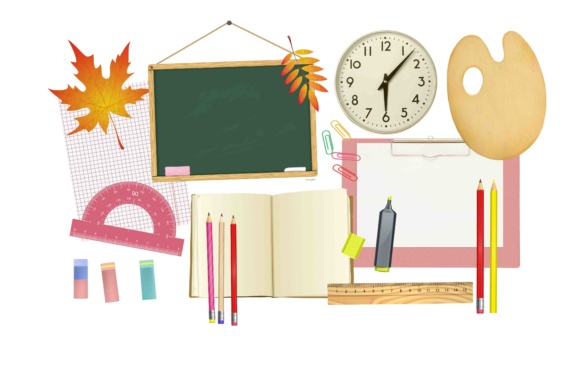
At its core, clipart provides a quick, cost-effective way to add visual interest without hiring a graphic designer or spending hours in illustration software. Back to School Clipart specifically captures the spirit of the season—pencils, books, apples, backpacks, rulers, glue bottles, and chalkboards. These familiar symbols evoke nostalgia, excitement, and a sense of readiness that resonates with students, parents, and teachers alike.
Think of the last time you saw a classroom newsletter that was nothing but walls of text. It probably felt overwhelming and uninspired. Now imagine that same newsletter dotted with cheerful pencil icons, a smiling school bus, and a stack of colorfully bound books. The difference is night and day. Visuals break up information, guide the reader’s eye, and make content more digestible. That is the power of well-chosen clipart.
Practical Applications Across Different Audiences
Teachers are perhaps the most frequent users of Back to School Clipart. From kindergarten to high school, educators rely on clipart to create worksheets, homework planners, behavior charts, classroom labels, and bulletin board displays. A multiplication worksheet becomes far more inviting when it features playful apple illustrations. A reading log feels less like a chore when accompanied by a cute bookworm graphic.
Parents also benefit greatly. Many families now print their own learning materials at home, especially if they homeschool or supplement classroom instruction. Back to School Clipart helps parents design personalized chore charts, lunchbox notes, homework caddies, and back-to-school countdown calendars. It turns routine tasks into shared creative moments with their children.
Small business owners and content creators round out the audience. Boutique stationery shops, tutoring centers, daycare providers, and educational influencers all need seasonal graphics for flyers, logos, social media posts, and product packaging. A tutoring center might use clipart to advertise a "sharpen your skills" campaign featuring pencil illustrations. A stationery shop could use school-themed icons to promote a limited-edition notebook line.
Key Qualities to Look for in Back to School Clipart
Not every set of clipart delivers the same value. When evaluating Back to School Clipart, several characteristics determine whether it will meet your needs or fall short. Here are the most important factors to consider.
Resolution and File Format
The specifications you mentioned—300 dpi and PNG format—are not arbitrary. They are industry standards for a reason. 300 dpi (dots per inch) ensures that images print crisp and clear, without pixelation or blur. This is critical for any physical output, whether you are printing a classroom banner, a workbook cover, or a flyer to distribute at a school open house.
PNG files offer transparency support, meaning the clipart does not come with a white or colored background. You can place a pencil graphic over a blue sky, a polka-dot pattern, or a textured paper background, and it blends seamlessly. This flexibility is a game-changer for layered designs. Without transparency, you would be limited to placing clipart only on solid white backgrounds, which severely restricts creative possibilities.
Variety and Thematic Cohesion
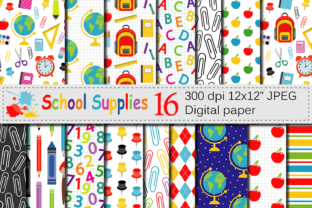
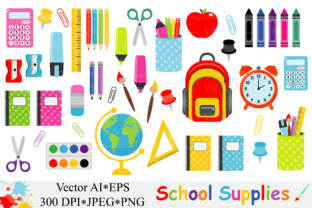
A strong clipart set includes a broad range of items—ideally between 15 and 30 distinct graphics—that share a consistent artistic style. For Back to School Clipart, you want to see pencils, books, apples, school buses, chalkboards, globes, scissors, glue, crayons, rulers, backpacks, and perhaps a few bonus items like stars, banners, or frames. Consistency in line weight, color palette, and illustration style ensures that every piece looks like it belongs together. Mixing a flat, minimalist pencil with a highly detailed, shaded book creates visual dissonance.
File Organization and Ease of Use
Anyone who has searched through a disorganized folder of clipart knows the frustration. The best sets come with clear, descriptive file names (e.g., "pencil_red.png," "apple_green.png," "bus_yellow.png") and sometimes include separate color and black-and-white versions. This saves you time and reduces friction when you are in the middle of a project. Some collections also bundle matching fonts or border elements, which can further streamline your design process.
How Back to School Clipart Fits Into Modern Workflows
The way we create and consume content has changed dramatically over the past decade. Digital tools like Canva, Adobe Spark, and Microsoft Publisher have put design capabilities into the hands of almost anyone. Back to School Clipart is a natural fit for these platforms. You can drag and drop PNG files directly into your project, resize them without losing quality (provided the original resolution is high enough), and layer them with text, shapes, and other graphics.
For teachers, this means creating custom materials in minutes. A second-grade teacher might open a blank document, drop a school bus image at the top, add the words "Welcome to Room 204," and arrange crayon icons along the bottom for a name tag template. Without clipart, that same project would require either drawing by hand or finding free alternatives that often have restrictive licenses or poor quality.
For bloggers and social media managers, Back to School Clipart serves as a fast way to build themed content. A single set of clipart can produce an entire campaign: a pencil graphic for a "sharp ideas" quote post, a book stack for a "reading list" carousel, and an apple for a teacher appreciation message. The consistency of the set ensures that your feed remains visually cohesive.
Print vs. Digital Considerations
When you work with clipart, it is important to understand the difference between print and digital use. For print projects, 300 dpi is the standard. For digital use—such as social media graphics, website images, or emails—72 dpi is technically sufficient because screens display at lower resolutions. However, because 300 dpi PNG files can always be downscaled for digital use, starting with high-resolution assets gives you maximum flexibility. You never know when a graphic that worked perfectly on Instagram might need to be printed for a physical event later.
Practical Benefits You Might Not Have Considered
Beyond the obvious aesthetic advantages, Back to School Clipart offers several practical benefits that are easy to overlook.
- Time savings: Instead of illustrating each element from scratch, you can assemble a complete design in minutes. This is especially valuable during the back-to-school crunch, when teachers and parents are juggling dozens of tasks simultaneously.
- Consistency across materials: Using a single clipart set ensures that your worksheets, posters, labels, and digital graphics all share a unified look. This builds brand recognition for school or business and creates a polished impression.
- Accessibility for non-designers: Not everyone has the skills or software to create original illustrations. Clipart democratizes design, allowing anyone to produce professional-looking materials regardless of artistic ability.
- Reusability: Once you purchase or download a clipart set, you can use it year after year. Many sets are licensed for both personal and commercial use, making them a cost-effective investment.
- Customization potential: With transparent PNG files, you can recolor graphics in your preferred palette using photo editing software, giving you complete creative control without altering the original file.
Real-World Scenarios and Recommendations
Let us walk through a few concrete examples to illustrate how Back to School Clipart can make a tangible difference.
Scenario 1: The Classroom Welcome Kit
A third-grade teacher wants to create a welcome packet for students. The packet includes a cover page, a class rules poster, a supply list, and a permission slip. Using a clipart set with pencils, apples, rulers, and a school bus, the teacher designs a bright, welcoming cover page. The supply list gets checkboxes with clipart icons next to each item—a glue bottle icon for glue sticks, a scissor icon for scissors. The permission slip includes a small star border. The whole packet comes together in under an hour and receives enthusiastic feedback from parents.
Scenario 2: The Homework Station Makeover
A parent wants to set up a dedicated homework area for two elementary school children. They print and laminate labels for supply bins—pencils, crayons, markers, erasers—using School Supplies Clipart. They also create a daily checklist with stationery clipart icons for each task: "pack your backpack," "do your reading," "set out your lunch." The visual cues reduce the amount of nagging required, and the children engage with the system more readily because it feels fun and playful.
Scenario 3: The Small Business Launch
A small educational toy company is launching a back-to-school sale. They need email headers, Instagram posts, and a banner for their website. Using a cohesive clipart set featuring School Clip art, they create a uniform look across all channels. The pencil icon becomes the centerpiece of their "Sharpen Your Playtime" campaign. The consistency helps the sale feel organized and professional, contributing to a noticeable uptick in engagement.
Factors to Consider Before Choosing a Clipart Set
With so many options available online, making a selection can feel overwhelming. Here are a few practical considerations to guide your decision.
- Licensing terms: Always check whether the clipart is licensed for personal use, commercial use, or both. If you plan to use it on products you sell, commercial licensing is essential.
- File count and diversity: A set with 15 to 30 pieces offers enough variety without becoming unwieldy. Look for a mix of items that align with your specific projects.
- Style compatibility: Consider the overall aesthetic of your projects. If you typically use flat, modern design, choose clipart with simple shapes and limited shading. If your materials lean toward a hand-drawn or vintage feel, look for clipart that matches that tone.
- Color palette: Sets that use a coordinated palette make it easier to combine multiple graphics without clashing. Some sets also include complementary background papers or borders.
Ultimately, Back to School Clipart is more than just decoration. It is a practical, versatile, and time-saving resource that empowers anyone to create visually compelling materials with ease. Whether you are a teacher preparing for a new semester, a parent organizing a home learning space, or a business owner building a seasonal campaign, investing in a high-quality set of 300 dpi PNG files will pay dividends in efficiency and polish. So as the next school year approaches, take a few minutes to explore what is available. The right clipart might be the simplest upgrade you can make to your workflow.