Woodland Animals Back to School Clip Art: A Complete Guide for Creators and Educators
When you are putting together classroom materials, educational resources, or seasonal marketing content, the visuals you choose can make or break the final product. The Woodland Animals Back to School Clip Art set offers a charming collection of 24 images featuring forest animals in a school setting, but many people overlook key details that affect how well these graphics actually work in practice. Understanding what this set provides, and what it does not, will save you time, frustration, and costly rework.
What Makes This Clip Art Set Distinctive
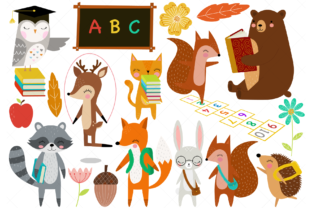
This particular collection brings together woodland creatures and classic school motifs. You get everything from an owl perched with books to a fox wearing a backpack, a raccoon carrying a book, and a hedgehog similarly equipped. There are also non-animal elements like an apple, an acorn, a chalkboard with and without ABC letters, a hopscotch court, and multiple leaves and flowers. The set includes a bear reading, an ornate book separate from that bear, two squirrel poses (one jumping, one playing hopscotch), a rabbit wearing glasses and a satchel, a deer skipping, and even a version of that deer with a shadow. Each image comes as a separate PNG file at 12 by 12 inches, 300 ppi, with a transparent background.
That level of detail matters more than most beginners realize. The transparent background alone eliminates the need for manual cutting or masking, which saves hours when you are layering images into a layout.
Overlooking the Technical Specifications
One of the most frequent errors is assuming all clip art is the same resolution. Many free or low-cost sets use 72 ppi images that look crisp on screen but turn blurry when printed. This set uses 300 ppi, which is the standard for professional print projects. If you plan to print worksheets, posters, or bulletin board decorations, you want that resolution. The 12x12 inch size also means you can scale the images down without losing quality, but scaling them much larger may introduce pixelation. Check your project dimensions before you drop the image into your design software.
Another technical detail is the file format. PNG files with transparent backgrounds are ideal for compositing, but some programs handle transparency better than others. If you are using an older version of a word processor or presentation tool, test a sample image first to confirm the transparency works as expected.
Ignoring the Cohesion of the Full Set
A second mistake is purchasing individual images from different sources and trying to combine them. The result often looks disjointed because the illustration styles, line weights, color palettes, and shading do not match. The Woodland Animals Back to School Clip Art set was designed as a cohesive collection. All 24 images share a consistent aesthetic, which means you can mix the owl, the squirrel, the fox, the raccoon, the bear, the rabbit, the hedgehog, and the deer together in one project and they will look like they belong in the same world. That coherence is especially valuable for educators creating a themed classroom environment or for small business owners building a consistent brand around a woodland school motif.
If you need a wider variety of poses or items, try to find expansion packs from the same illustrator rather than piecing together mismatched graphics.
Underusing the Non-Animal Elements
Many people focus only on the animal characters and forget about the supporting items. The chalkboard with ABC letters, the chalkboard without letters, the books, the apple, the acorn, the leaves, and the flowers are not afterthoughts. They are practical assets for framing, borders, labels, and background details. The ornate book separate from the bear, for instance, can be used as a standalone accent or as a prop in a reading corner sign. The hopscotch court can serve as a game board or a diagram for teaching numbers. By ignoring these extras, you leave value on the table and may end up hunting for additional graphics that you already own.
How These Mistakes Affect Your Final Product
When resolution is too low, printed materials look unprofessional. When styles clash, the page feels chaotic. When you neglect the supporting elements, your design can feel sparse or incomplete. These issues matter whether you are creating a back-to-school newsletter, a set of flashcards, a classroom decoration, or a social media post for your tutoring business. The audience notices inconsistency even if they cannot name why something looks off. A polished, coordinated visual presentation builds trust and makes your content easier to engage with.
For example, a teacher might print a welcome sign using the bear reading and the chalkboard with ABC letters. If those images were pulled from different sources with different line thicknesses and color temperatures, the sign looks homemade in a distracting way. Using cohesive clip art avoids that problem from the start.
Plan Your Layouts Before You Start Placing Images
Open your design software, set up a canvas the size of your final output, and decide where each element will go. Because the PNG files are 12x12 inches at 300 ppi, you will likely need to scale them down for most standard page sizes. A typical letter-size document is 8.5 by 11 inches, so a 12-inch square image will not fit without resizing. Scale uniformly by holding the shift key while dragging a corner handle, or by entering a percentage that keeps the aspect ratio locked. This prevents distortion that makes animals look squashed or stretched.
Choose the Right Characters for Your Message
Each animal has a slightly different posture and expression, which can reinforce the tone of your material. The deer skipping conveys energy and joy, making it a strong choice for recess or movement-themed pages. The squirrel playing hopscotch suggests focus and playfulness, good for math games or brain breaks. The cat carrying books and the raccoon carrying a book both imply readiness to learn, suitable for reading lists or library signs. The fox with a backpack and the hedgehog with a backpack communicate preparedness, which works well for supply checklists or morning routine posters. The rabbit wearing glasses and a satchel adds a scholarly, slightly studious vibe, great for advanced reading materials or homework reminders.
Matching the character to the context makes your content feel intentional rather than random.
Layer Strategically with Transparent Backgrounds
The PNG transparency lets you place these images over colored backgrounds, patterned paper, or photographs. But be careful with contrast. A brown leaf on a brown background may disappear. A turquoise flower on a bright blue background might clash rather than complement. Test your combinations early. You can also add a subtle shadow or outline behind an image to separate it from a busy background, but keep it consistent across all graphics used in the same project.
Respect the Scale of Realistic Classroom Use
If you are printing for a bulletin board, consider how large the images will appear from a few feet away. A 4-inch tall squirrel might be too small to read from across the room. Enlarge key characters to 6 or 8 inches for visibility. Because these files start at 12 inches, you have plenty of resolution to work with. For digital use, such as a PDF or a Google Slide, images can be smaller since viewers are up close to their screens.
What to Check Before You Buy or Download
Before committing to any clip art set, verify the licensing terms. Some sets allow unlimited commercial use, while others restrict how you can distribute or resell the images. This set is typically sold for both personal and educational use, but confirm whether it covers commercial products like Teachers Pay Teachers resources or marketing materials for your business. Look for a clear license statement from the seller.
Also check the file structure. The set is delivered as a single ZIP file containing 24 individual PNGs. Make sure you have software that can extract ZIP archives. On most computers, this is built in, but if you are using a mobile device or a school computer with restricted permissions, you may need to download a free extraction app. Once extracted, organize the files into folders by character or by type (animals, school supplies, nature elements) so you can find what you need quickly.
Examine the sample images provided in the product listing. Look for consistent line quality, vibrant but not garish colors, and clean edges. If the preview images look good at full size, the actual files should match. If the preview is blurred or watermarked heavily, you may not get a clear picture of what you are buying.
Who Benefits Most from This Specific Set
Educators working with preschool through early elementary grades will find these images especially useful. The forest school theme aligns with nature-based curriculum trends, and the animals are friendly without being overly cartoony. Homeschool parents can use them to create custom unit studies or reward charts. Small business owners who run tutoring centers, daycare facilities, or childrens enrichment programs can incorporate the graphics into branded materials like flyers, schedules, and social media posts. Freelance designers working on educational projects can offer a cohesive look to clients without having to illustrate every element from scratch.
Content creators on platforms like Teachers Pay Teachers, Etsy, or Canva can also leverage these images to build themed bundles. Because the set includes both animals and props, you can create complete lesson packages around a woodland school narrative, which is a popular and engaging concept for young learners.
A Better Approach to Selecting Clip Art
Rather than grabbing the first cute set you see, start by listing what you actually need. Do you require multiple poses of the same animal? Do you need school-related objects like chalkboards and books? Do you need variety in colors and seasons? The Woodland Animals Back to School Clip Art set answers yes to all of these. It gives you two squirrels doing different activities, two versions of the chalkboard, multiple leaves and flowers, and a mix of animals with different accessories. That variety reduces the number of individual purchases you need to make, which saves money and ensures consistency.
If you later decide you want additional animals like a bird or a mouse, or extra props like a pencil or a ruler, look for a complementary set from the same creator. Many illustrators release seasonal or thematic expansions that blend seamlessly with their original work.
Final Pointers for Using the Files
Keep the original ZIP archive in a dedicated folder on your computer or cloud storage. If you ever need to re-download an image, you will have the originals intact. When resizing, always work from the original PNG file, not a previously resized version, to avoid generational quality loss. For layered projects, save your working file in a native format like PSD, AI, or INDD so you can adjust individual elements later. Export to PDF or PNG only when you are ready to publish or print.
Finally, print a test page on your own printer before running a large batch. Colors can shift between screens and printers, and what looks perfect on your monitor may come out too dark or too muted on paper. Adjust your design accordingly, and then proceed with confidence.
The Woodland Animals Back to School Clip Art set is a versatile, well-prepared collection that can serve a wide range of educational and creative projects. By understanding its strengths, respecting its technical specifications, and planning your layouts thoughtfully, you will avoid the common pitfalls that trip up many users. The result will be polished, professional materials that your students, customers, or audience will genuinely enjoy.