Back to School Flag Line: An Evaluation for Educators and Graphic Designers
As the summer winds down and the new academic year approaches, the search for cohesive and visually appealing decorations begins. Among the many resources available, the Back to School Flag Line has emerged as a specific solution for those looking to create a unified theme. This article evaluates what this resource offers, who it serves best, and when alternatives might be more practical. The focus is on helping you assess whether this design package aligns with your specific project needs, rather than on promotional description.
What Is the Back to School Flag Line?
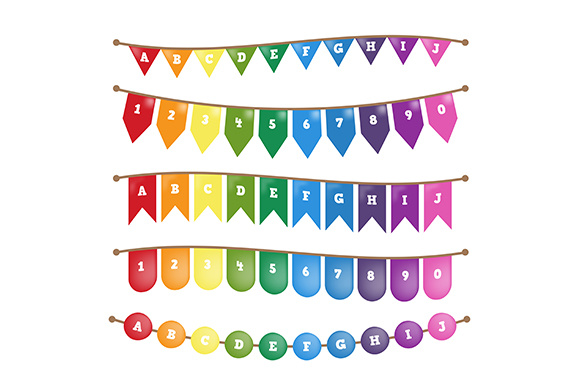
The Back to School Flag Line is a design resource package that provides a coordinated set of flag-based graphics intended for back-to-school contexts. It is delivered as a single ZIP folder, which contains two core file types: one JPG file and one EPS file. The JPG file offers a ready-to-use raster image, while the EPS file provides a scalable vector version that can be edited in compatible software like Adobe Illustrator or CorelDRAW. The term “flag line” refers to the arrangement of individual flag elements—often pennants, banners, or signal flags—that together form a decorative line suitable for bunting, headers, or thematic displays.
Rather than being a comprehensive suite of school graphics, this is a focused collection that centers on a flag-line motif. The EPS file is the key for those who need to modify colors, sizes, or individual elements, while the JPG serves as an immediate-use option for quick projects. Understanding this dual-file structure is essential when evaluating whether the resource meets your workflow requirements.
Who Might Be Interested in This Resource?
Several groups may find the Back to School Flag Line worth examining:
- Classroom teachers who want to dress up bulletin boards, doorways, or reading corners with a consistent theme.
- School administrators looking for signage or hallway decorations for the first day of school.
- Graphic designers tasked with creating promotional materials for educational events or school supply campaigns.
- Parent-teacher organization volunteers who need affordable, ready-made designs for bake sales, open houses, or welcome events.
- Event planners organizing back-to-school community gatherings, where a cohesive visual line adds a festive touch.
The common thread among these users is a need for a pre-designed element that can be deployed quickly or adapted with moderate effort. If you fall into one of these categories, the Back to School Flag Line may be a practical starting point.
Time Savings and Immediate Use
The JPG file included in the ZIP folder can be used instantly. You can print it, place it on a web page, or include it in a presentation without any editing. For classrooms with limited preparation time, this immediacy is a clear advantage. There is no need to open design software unless you require modifications.
Vector Editing Capabilities
The EPS file offers scalability without loss of quality. Whether you need to enlarge the flag line for a large wall display or shrink it for a handout, the vector format maintains crisp edges. For designers, this means you can also adjust individual flag colors to match a school’s palette or add text elements to personalize the design.
Cohesive Theme in One Download
Because the flags are designed as a line, they create visual continuity. When multiple flag elements are strung together, they suggest movement and celebration—qualities that suit the back-to-school milestone. Having a coordinated set reduces the risk of mismatched visuals that can occur when pulling graphics from different sources.
Limited Scope of the Design
The Back to School Flag Line is exactly that—a line of flags. It does not include separate icons, borders, or full-page illustrations. If your project calls for diverse elements such as school buses, books, apples, or children, you would need to supplement this resource with additional graphics. The flag line works best as an accent or border element, not as a standalone visual for a poster or flyer that needs multiple focal points.
File Format Constraints
While the EPS file is versatile, not all users have the software to edit it. If you rely solely on free or web-based tools, you may find EPS files difficult to open. In that case, the JPG file is your only option, which means you cannot customize colors or remove individual flags. Some online converters can handle EPS to SVG or PDF, but the process adds steps and may alter the design.
Resolution and Print Quality
The JPG file is likely provided at a specific resolution. Without knowing the exact dimensions, you should check the pixel size before committing. A small JPG might look pixelated when printed at poster size. The EPS file solves this, but again, you need editing capabilities to export it at the desired resolution. For large-format printing, vector output from the EPS is preferred.
Design Versatility
Flag lines are inherently linear. They work well for horizontal spaces like the top of a chalkboard, the edge of a bulletin board, or the header of a webpage. They are less suited for square or vertical layouts where a centered image is required. If your intended application is a circular badge, a square label, or a vertical banner, the flag line may need to be cropped or rotated, which could reduce its impact.
Situations Where It Is a Strong Fit
- Classroom door decorations: A flag line across the top of a door creates a festive entrance without taking up too much space.
- Bulletin board borders: Instead of a plain trim, the flag line adds a thematic edge that ties in with the season.
- Newsletter headers: Place the flag line at the top of a school newsletter to clearly signal the back-to-school focus.
- Social media graphics: Use the JPG for a quick Facebook cover or Instagram story background with a celebratory feel.
- Welcome banners: String multiple printed flag lines across a gymnasium or cafeteria doorway for an in-person event.
In each of these cases, the flag line serves as a supporting visual that signals the theme without overwhelming the content. It works particularly well when the surrounding text or images are simple, allowing the flag line to provide a pop of color and motion.
Situations Where Alternatives May Be Worth Considering
- Need for a central hero image: If you require a single large graphic such as a school bus illustration, a teacher figure, or a chalkboard design, a flag line is not the right choice. Look for clip art packs with diverse subjects.
- Multiple classroom themes: If your school has different grade-level themes (e.g., “Oceans of Learning” or “Space Explorers”), a single flag line may feel generic. Consider a customizable set where you can change flag shapes or add icons.
- Large-scale printing on a tight budget: If you need to print across several large banners, the EPS file is ideal, but you may want a design that includes more visual interest per square foot. A simple flag line could look sparse on a wide banner.
- Full page worksheets or handouts: For activity sheets that need corner decorations or border frames, a flag line only works along one edge. A complete border set would be more functional.
- Digital presentations that require animation: The static JPG and EPS files do not support motion. Animated flag lines would need to be created from scratch using the EPS as a base.
If your project falls into these categories, you may want to supplement the Back to School Flag Line with other resources or look for a more comprehensive bundle that includes flags, borders, icons, and backgrounds.
Practical Decision-Making Insights
When evaluating whether the Back to School Flag Line aligns with your goals, consider these factors:
- Define your output medium. Will the design be printed or used digitally? For digital-only use, the JPG may suffice. For print, you likely need the EPS to control resolution.
- Evaluate your editing skills and tools. If you own vector editing software and are comfortable adjusting paths and colors, the EPS file becomes a flexible resource. If not, the JPG is your sole option, which limits what you can do.
- Assess the visual role of the flag line. Is it meant to be a main element or a supporting one? If it is the main element, ensure the design has enough visual weight—consider the colors, scale, and complexity of the flags. If it is a supporting element, the flag line can be an easy way to unify materials.
- Consider the quantity of materials you need. For a single banner or display, a single ZIP folder may be enough. For a whole school website overhaul or a series of classroom kits, you might need multiple flag lines in different colorways or with different motifs.
- Plan for future use. Will this design be used again for the next back-to-school season? If the design is seasonal and school-specific, you may want to create a reusable template from the EPS file that can be updated annually with new colors or year numbers.
These questions help you move from a simple “Does this look nice?” to a more practical “Does this resource solve my actual problem?” The answer often depends on the scope of your project and your tolerance for pairing additional assets.
Final Evaluation: Aligning the Resource with Your Needs
The Back to School Flag Line is a focused design resource that excels in specific contexts. It offers a quick, thematic visual element that can be deployed with minimal effort, especially if you use the JPG file as-is. The inclusion of the EPS file gives it flexibility for those who want to modify the flags, change the composition, or integrate the design into larger layouts.
Its main limitation is its narrow scope. If you need a full suite of back-to-school graphics, this resource will be one piece of a larger puzzle. It works best as an accent or border, not as a complete visual solution. For users who need only a flag line—for example, a teacher decorating a single bulletin board or a designer creating a themed header—it offers a ready-made, cohesive option that saves time compared to designing flags from scratch.
To summarize, the Back to School Flag Line is worth considering if your project involves linear decoration, you have access to or are willing to work with EPS files for customization, and you accept that the design is limited to flag motifs. If your requirements include diverse imagery, large-scale formats with high visual density, or multiple coordinated themes, you will likely need to combine this resource with other design elements or explore alternative packs that offer broader coverage.
By weighing these factors against your specific goals, you can make an informed decision that balances time, cost, creative control, and the overall visual result.